

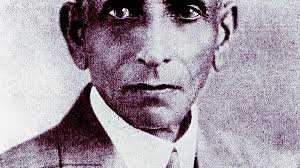
In the latest episode of The Hindu’s The Rearview Podcast, hosts Jacob Koshy and Sobhana K Nair delve into one of South India’s most enduring legacies: the life of Sir M. Visvesvaraya and the complex water politics of the Cauvery river .
When people speak of Sir M. Visvesvaraya, they usually remember him as one of India’s greatest engineers. As Diwan of Mysore in the early twentieth century, he championed ambitious infrastructure projects that he believed would modernise the princely state and drive economic growth .
A Vision Built in Stone
Among his most significant achievements was the Krishna Raja Sagara (KRS) dam across the Cauvery River. Visvesvaraya strongly supported the project because Mysore needed reliable water storage and electricity . One important motivation was to provide power for the Kolar Gold Fields, then among the most important mining centres in India. The dam helped transform Mysore’s economy by supporting industry and expanding access to electricity .
The project, however, was by no means a cakewalk. It required the approval of the Maharaja of Mysore, Krishna Raja Wadiyar, his diwan, Ananda Rao, and officials of the British empire. Above all, it had to secure the cooperation of the Madras Presidency, which had only a few years before objected to similar plans for a reservoir. The whole enterprise was politically fraught and financially overwhelming: at one point Visvesvaraya threatened to quit if the Maharaja did not approve the dam .
The Price of Prosperity
But the KRS dam’s impact went far beyond mining. The vast reservoir enabled large-scale irrigation across parts of present-day Karnataka. Farmers increasingly cultivated water-intensive crops such as sugarcane and paddy, bringing prosperity to many regions but also creating a growing dependence on Cauvery waters .
That agricultural transformation had long-term consequences. Before the dam, irrigation in the Cauvery basin in Mysore was carried out mainly through diversions of rivers and tanks, with water ultimately destined for the delta area of Madras . As irrigation expanded upstream in Karnataka, concerns grew downstream in what is now Tamil Nadu.
The Seeds of a Century-Long Dispute
Competing demands eventually evolved into one of India’s most enduring inter-state water disputes. In a letter written on July 6, 1915, Visvesvaraya noted the massive imbalance: “The whole area irrigated under the Cauvery System in Mysore at present is about 1,15,000 acres only against a corresponding area of 12,25,500 acres in Madras…” .
More than a century later, debates over sharing the Cauvery continue, linking today’s politics and agriculture to Visvesvaraya’s vision of development through engineering . The dispute eventually led to the formation of the Cauvery Water Disputes Tribunal in 1990, which finally awarded 419 TMC ft of water to Tamil Nadu and 270 TMC ft to Karnataka .
Tune into the full episode of The Rearview Podcast for a deeper dive into the history, politics, and engineering marvels that define Karnataka’s water reality today.