

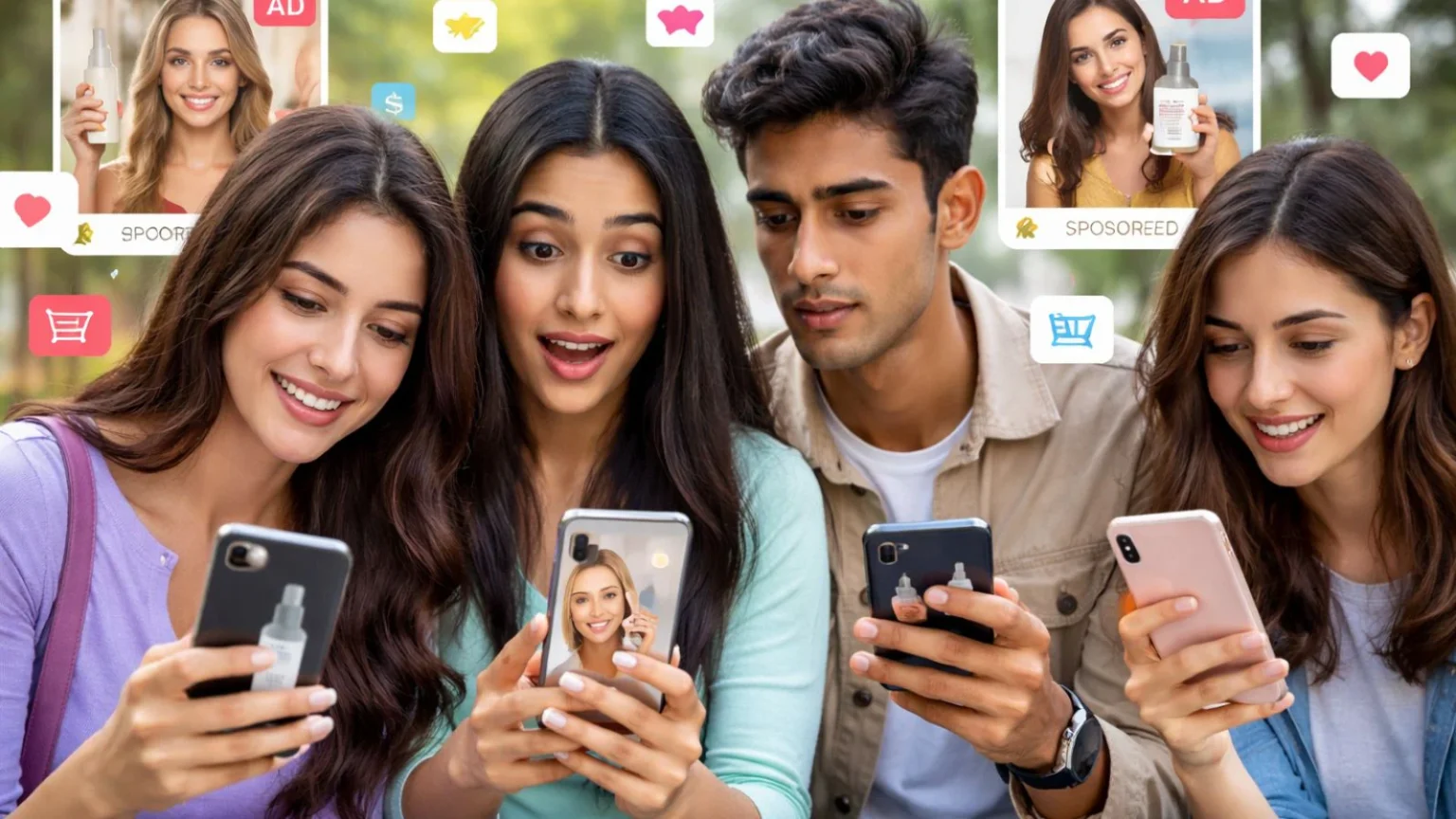
For 22-year-old athlete Nisha Ghadage, trusting a fitness influencer’s recommendation for a “100% natural” hair serum led to scalp irritation and a dip in sporting performance during training . For 25-year-old Vishal Nikam, a skincare routine promoted by a trusted Instagram creator didn’t give him glowing skin; it left him with irritation and a “lighter wallet” .
These are not isolated incidents. As influencer marketing in India balloons—with the industry projected to be worth over ₹6,800 crores—a hidden epidemic of undisclosed advertising is leaving young consumers financially cheated, physically harmed, and psychologically vulnerable .
The Hidden Costs of ‘Glow Ups’
The line between a genuine recommendation and a paid promotion has become dangerously blurred. For young people idolizing digital creators, these undisclosed ads act as a powerful “siren call” to spend . The impact is felt on three distinct levels:
1. The Financial Tax: 23-year-old event manager Rakshana More purchased an expensive skincare kit based on “honest reviews,” only to discover the posts were sponsored . Similarly, engineering student Shivaraj Mane admitted that after using a premium influencer-favorite combo for a month, he saw “no visible difference, only a lighter wallet” .
2. The Physical Toll: The consequences often go beyond wasted money. Varsha Panaskar, a 24-year-old student, shifted from basic kajal to a full-face foundation routine based on influencer advice. The result was frequent pimples and skin irritation, as she never checked the ingredients . Athletes like Nisha Ghadage face an even higher stake, as undisclosed products can interact negatively with sweat and sun exposure, directly harming “performance and confidence” .
3. The Erosion of Trust: The cumulative effect of these deceptions is a generation that feels duped by the very personalities they trusted.
A ‘Wild West’ of Advertising
Despite the existence of guidelines from the Advertising Standards Council of India (ASCI) and the Consumer Protection Act requiring labels like “Ad” or “Sponsored,” implementation remains shockingly poor .
Data from FY 2024–25 shows that of the influencer ads processed by ASCI, a staggering 98% required modification due to violations . A concerning 56.8% carried no disclosure label at all, while 43.2% buried disclosures in hashtags, rendering them practically invisible .
The ‘Kid-Guru’ Blind Spot
Perhaps the most troubling frontier of this issue is the rise of monetized “Kid-Gurus” . Operating within a legal grey zone, these child influencers are treated as a “family enterprise,” bypassing standard child labor protections . The Children often sacrifice their education and privacy for content creation, with no legal financial protections . A 2026 ASCI study noted a specific vulnerability here, finding that kids aged 7-12 often spot overt banner ads but completely miss the “hidden commercial intent” of an influencer vlog .