

São Paulo, Brazil – The influencer marketing landscape is maturing, and with it, the questions brands ask about their campaigns are changing. According to industry experts, the most attentive marketing executives are no longer solely focused on reach but are increasingly prioritizing relevance and trust. As the market evolves, the consensus is that audience size alone is not a sufficient measure of a campaign’s effectiveness, and brands must build deeper connections to succeed.
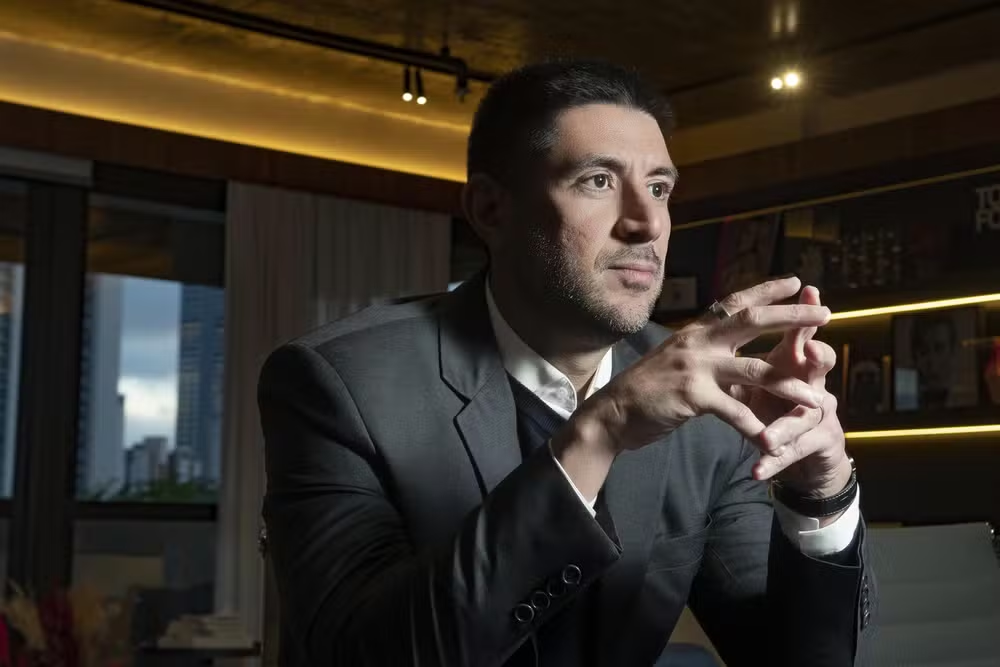
Thiago Bispo, CEO of BR Media, an influencer-marketing agency acquired by Publicis, noted that the industry has moved from viewing influencer marketing as a tactical experiment to integrating it into major brand-building strategies. “Brands need to trust that influencer marketing belongs at the beginning of strategy development, not as a layer added after the plan is already complete,” he said. Rafael Coca, cofounder of agency Spark, echoed this, stating that mature brands understand that “audience and relevance are not the same.” He emphasized that in a world where any content can be promoted, a creator’s relevance, authority, and genuine ability to engage within a specific niche are what truly matter.
Read us – Nia Sharma’s Maldives Vacation Photos Spark Relationship Buzz with Sikander Singh
The shift is supported by data. A Ponto Map study found that microinfluencers generate six times more engagement than influencers with large audiences. However, trust remains a critical factor, with a Ponto Map “Media Credibility” survey revealing that 50% of respondents trust the press more than influencers (36%). This distinction between attention and trust is crucial, as content creators’ techniques have spread to professionals like lawyers and doctors, creating risks when digital credibility is not backed by real-world expertise. Experts warn that governance and human curation are essential, particularly as AI advances and becomes capable of generating content without oversight.
The growing importance of influencer marketing was evident at the Cannes Lions festival, which expanded its Creators hub and drew significant sponsorship. The message is clear: influencer marketing has moved from a supporting role to an essential component of companies’ communication strategies. As the market continues to evolve, the brands that succeed will be those that prioritize relevance and trust over sheer reach, understanding that true influence is built on genuine connection.