
The landscape of sports marketing is undergoing a seismic shift, and consumer packaged goods giant Unilever is leading the charge with an innovative approach that prioritizes digital engagement over traditional broadcast advertising. As brands navigate media fragmentation, Unilever’s strategy offers a blueprint for connecting with modern audiences where they actually consume content.
Doubling Down on Digital Innovation
Unilever’s commitment to sports marketing has intensified dramatically, with U.S. sports marketing spend nearly doubling between 2024 and 2025. This aggressive expansion reflects a fundamental reimagining of how brands should engage with sports fans in an era where social media platforms like TikTok and Instagram often matter more than television commercials.
“There are few things that carry this kind of focused attention, where so many are watching, and yet also the pockets are there in terms of cohorts, communities within it that are enjoying and engaging from different angles,” explains Ryu Yokoi, Unilever’s chief media and marketing capabilities officer.
From One-to-Many to Many-to-Many Marketing
The CPG marketer has pivoted from traditional broadcast strategies toward what they call “many-to-many” marketing—an approach that recognizes sports fans exist at multiple engagement levels. This philosophy manifests in diverse activations that range from viral social moments to experiential marketing campaigns.
Take Hellmann’s partnership with NFL quarterback Will Levis, which began when the athlete went viral for adding mayonnaise to his coffee. Rather than simply running television ads, Hellmann’s created mock press conferences, launched a satirical “parfum de mayonnaise” fragrance campaign, and built an ongoing social media relationship that feels authentic rather than forced.
FIFA World Cup 26: A Social-First Showcase
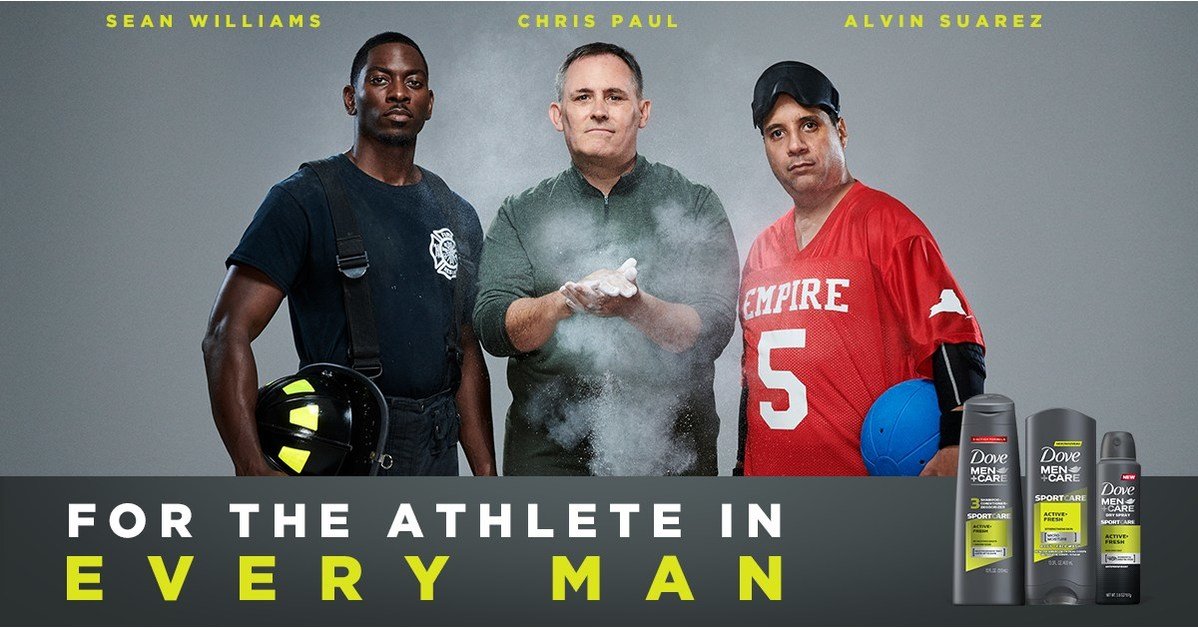
Unilever’s Dove Men+Care brand is leveraging its FIFA World Cup 26 sponsorship with a campaign that exemplifies this new approach. The activation features former NFL star Marshawn Lynch attending a “super fan training camp” with U.S. soccer player Trinity Rodman, cleverly bridging American football and soccer cultures while running primarily on Meta and TikTok rather than traditional channels.
“In principle, this is the biggest spectator event in all of history,” Yokoi notes about the World Cup, which will be hosted across North America starting in June 2026.
Creative Activations That Go Viral
Unilever’s sports marketing strategy thrives on unconventional ideas that capture attention organically. For its U.S. Open tennis sponsorship, Dove recruited an “underarm ambassador” to create TikTok content promoting antiperspirant products—turning an unglamorous body part into engaging social media content.
This playful approach extends to experiential marketing at comic conventions and music festivals, where Dove addresses sweating and hygiene concerns while building brand affinity with younger audiences.
Streaming Platforms Open Performance Marketing Opportunities
The migration of sports content to streaming services has created new possibilities for Unilever to connect brand building with measurable performance outcomes. The company has partnered with Amazon to utilize audience-based creative tools that tailor advertisements to specific households based on demographic and behavioral data.
Amazon’s combination of retail media capabilities with premium sports content—including NFL Thursday Night Football and NBA games—enables Unilever to track how sports marketing directly drives product purchases, creating a direct “culture to cart” pathway that was impossible with traditional broadcast television.
Balancing Purpose and Performance
Despite the emphasis on performance marketing and digital metrics, Unilever maintains its commitment to purpose-driven messaging. Dove’s Super Bowl advertisement highlighting how body confidence issues cause young girls to abandon sports resonated emotionally while reaching incremental audiences like youth sports coaches.
“We have to look at both the short-term and the long-term impacts in terms of the equity we’re building and also, in the short term, the real drive to sale,” Yokoi emphasizes, noting that sports marketing windows create crucial merchandising opportunities with retail partners.
The Future of Sports Sponsorships
Unilever’s evolving sports marketing philosophy reflects broader industry trends as brands adapt to fragmented media consumption and changing viewer behaviors. By treating sports as a “diversifying sandbox” for experimentation rather than simply a broadcast vehicle, the company is building more resilient marketing strategies that work across multiple platforms and engagement levels.
As Fernando Fernandez, Unilever’s CEO, committed to allocating half of the company’s total advertising spend to social media while increasing influencer collaborations twentyfold, the CPG giant’s sports marketing investments serve as a laboratory for testing these digital-first approaches at scale.
For marketers watching the evolution of sports sponsorships, Unilever’s approach demonstrates that success in 2026 and beyond requires thinking far beyond traditional broadcast conventions—embracing social platforms, streaming services, experiential activations, and authentic influencer partnerships that meet fans wherever they choose to engage with the sports they love.