

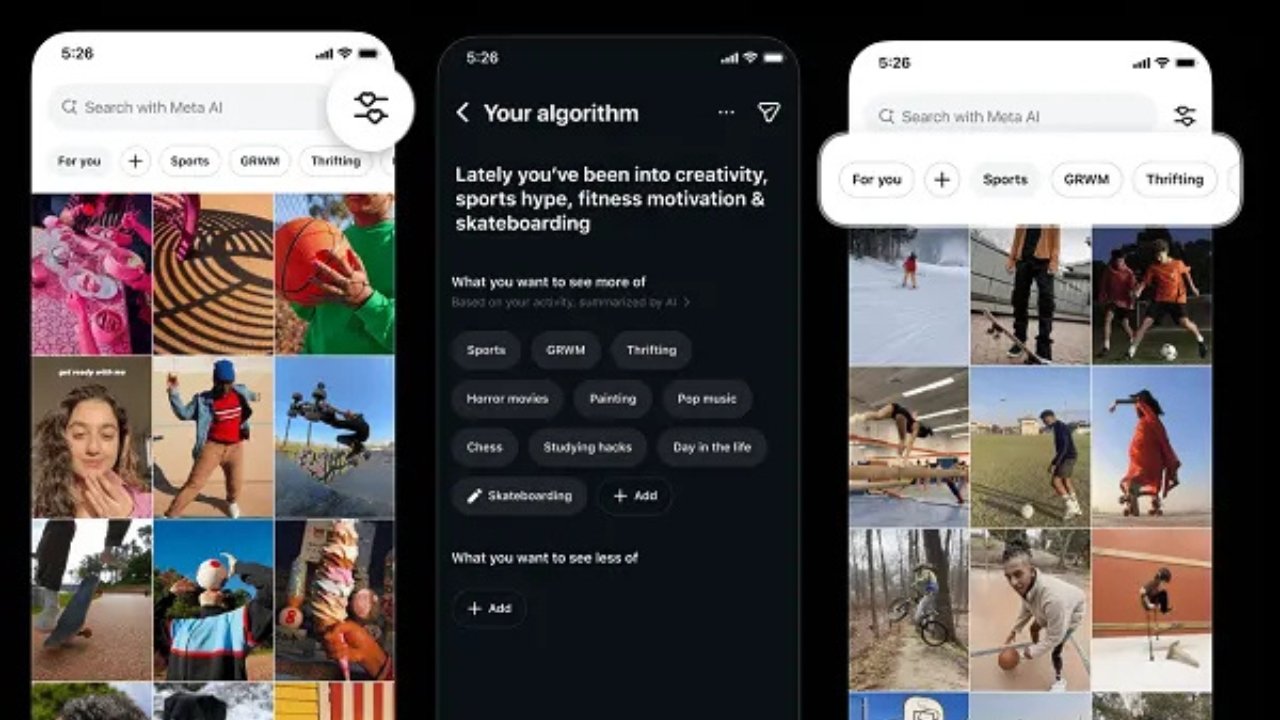
Instagram has announced an expansion of its “Your Algorithm” content recommendation control option. The feature, which was previously available only for Reels, is now being extended to Instagram Explore – giving users greater capacity to control what the algorithm shows them across both surfaces.
The rollout applies to all English-language users and represents Instagram’s latest effort to address long-standing user complaints about lack of transparency and control over algorithmic recommendations.
How ‘Your Algorithm’ Works
Your Algorithm provides a direct input option to help manage the content users see in the app. The feature uses simple topic prompts that enable basic guidance of interests in-stream.
Instagram began testing the option for Reels in October 2025. Now, the company is giving users expanded input within another key content surface.
“Just like on Reels, you can view the topics Instagram thinks you’re into and easily adjust them to see more or less of what you want,” Instagram explained.
Key Features of the Expanded Tool
| Feature | Description |
|---|---|
| Topic viewing | See what topics Instagram’s algorithm thinks you’re interested in |
| Adjustable preferences | Easily change topics to see more or less of specific content |
| Cross-surface sync | Changes in Reels or Explore carry across both surfaces |
| Topic pills | Add or remove interests directly from the top of Explore page |
| Story sharing | Share your interests in a Story to let others know about the update |
‘One Algorithm, Reflected Across Surfaces’
One of the most significant aspects of the update is that changes apply across both Reels and Explore. According to Instagram:
“Type in the topics you want to see more or less of, and your Reels and Explore content will reflect your choices. It’s all one system, so changes you make in Reels or Explore carry across both. One algorithm, reflected across surfaces.”
This integration means users no longer need to adjust preferences separately for different parts of the app. A single change to topic preferences will ripple across all algorithmic content surfaces.
Additional Control Points
- Topic pills at top of Explore page – Users can add or remove interests directly from this location, providing a more direct access point to topic controls
- Story sharing option – Users can share their interest preferences in a Story, potentially normalizing the practice of algorithm customization
The Irony of Algorithm Controls
While the feature gives users more control, Social Media Today notes an interesting tension: few people actually use these tools when they are available.
The Pattern Across Social Platforms
| User Demand | Actual Behavior |
|---|---|
| “Give us chronological feeds” | Most users don’t switch from algorithmic feeds |
| “Give us more algorithm control” | Few users actively customize preferences |
| “Give us data protection tools” | Most users accept default settings |
As the article notes:
“Social media users often complain about a lack of algorithm control, how they’d prefer to have a chronological feed and how they want more ways to control their experience. In reality, when they have these things, the majority of people don’t use them.”
This pattern has been observed repeatedly across security changes, data protections, algorithm controls, and feed preferences. People demand these options – but for the most part, these features act as reassurance, not as real control mechanisms.
Why Users Don’t Use Controls
Most people, the analysis suggests, simply want to log on and start scrolling. The development of engagement-based algorithms has made this even more of a factor – the system already shows users more of what they are interested in, without them needing to manually adjust anything.
Factors Working Against Manual Controls
| Factor | Explanation |
|---|---|
| Effort | Manual customization requires time and thought |
| Satisfaction with defaults | Most users are reasonably happy with what they see |
| Algorithm effectiveness | AI-powered recommendations are increasingly accurate |
| Habit | Users are accustomed to passive scrolling |
The report notes: “With artificial intelligence-powered recommendations driving all of the gains in user engagement in Meta’s apps, it’s unlikely the company would be handing over this level of control to users if it felt that they were actually going to implement changes at scale.”
In other words, Instagram likely knows that most users will not radically change their preferences – making the feature a low-risk, high-reassurance addition.
Why This Feature Still Matters
Despite low expected usage, the expansion of Your Algorithm to Explore is still significant for several reasons:
1. Addressing Regulatory Pressure
Governments worldwide are demanding greater transparency and user control over algorithmic recommendations. Features like this help Instagram demonstrate compliance.
2. Power Users and Niche Communities
While most users won’t touch the feature, power users and those with very specific interests will appreciate the ability to fine-tune their feeds.
3. Mitigating Algorithmic Bias
Users who feel they are being unfairly pigeonholed by Instagram’s AI can now manually correct topics they are not actually interested in.
4. Educational Value
The feature shows users what topics Instagram thinks they like – which can be eye-opening and lead to more intentional engagement.
How to Access Your Algorithm in Explore
For English-language users, the feature is now available. To access it:
- Open Instagram and navigate to the Explore tab (magnifying glass icon)
- Look for topic pills at the top of the page
- Tap on any topic to adjust preferences (see more or less)
- Alternatively, access Your Algorithm settings through the Reels interface
- Changes made in either location will sync across both surfaces
Users can also share their interests in a Story – a feature Instagram likely hopes will drive awareness and adoption of the tool.
The Future of Algorithm Control
Instagram’s move reflects a broader industry trend toward user-configurable algorithms. TikTok, YouTube, and Twitter (X) have all introduced various forms of content preference controls.
Industry Comparison
| Platform | Algorithm Control Features |
|---|---|
| Your Algorithm (Reels + Explore) | |
| TikTok | “Not interested” button, content preferences |
| YouTube | “Don’t recommend channel,” thumbs up/down |
| X (Twitter) | “Show less often,” muted words |
The key difference with Instagram’s approach is proactive topic selection – not just reactive feedback (likes/dislikes), but direct declaration of interests.
A Step Forward, Even If Few Use It
Instagram’s expansion of Your Algorithm to Explore gives English-language users more control over what they see – at least in theory. In practice, most people will likely continue scrolling without ever touching the settings.
But for the minority who do care about algorithmic transparency and customization, the feature is a genuine improvement. It provides insight into how Instagram perceives their interests and offers a direct line to correct misperceptions.
As Meta continues to face regulatory scrutiny over its recommendation systems, features like Your Algorithm may become not just optional additions but required compliance tools. For now, however, they remain opt-in – available to those who want them, invisible to those who don’t.
And perhaps that is the right balance: control for those who seek it, and seamless scrolling for everyone else.