

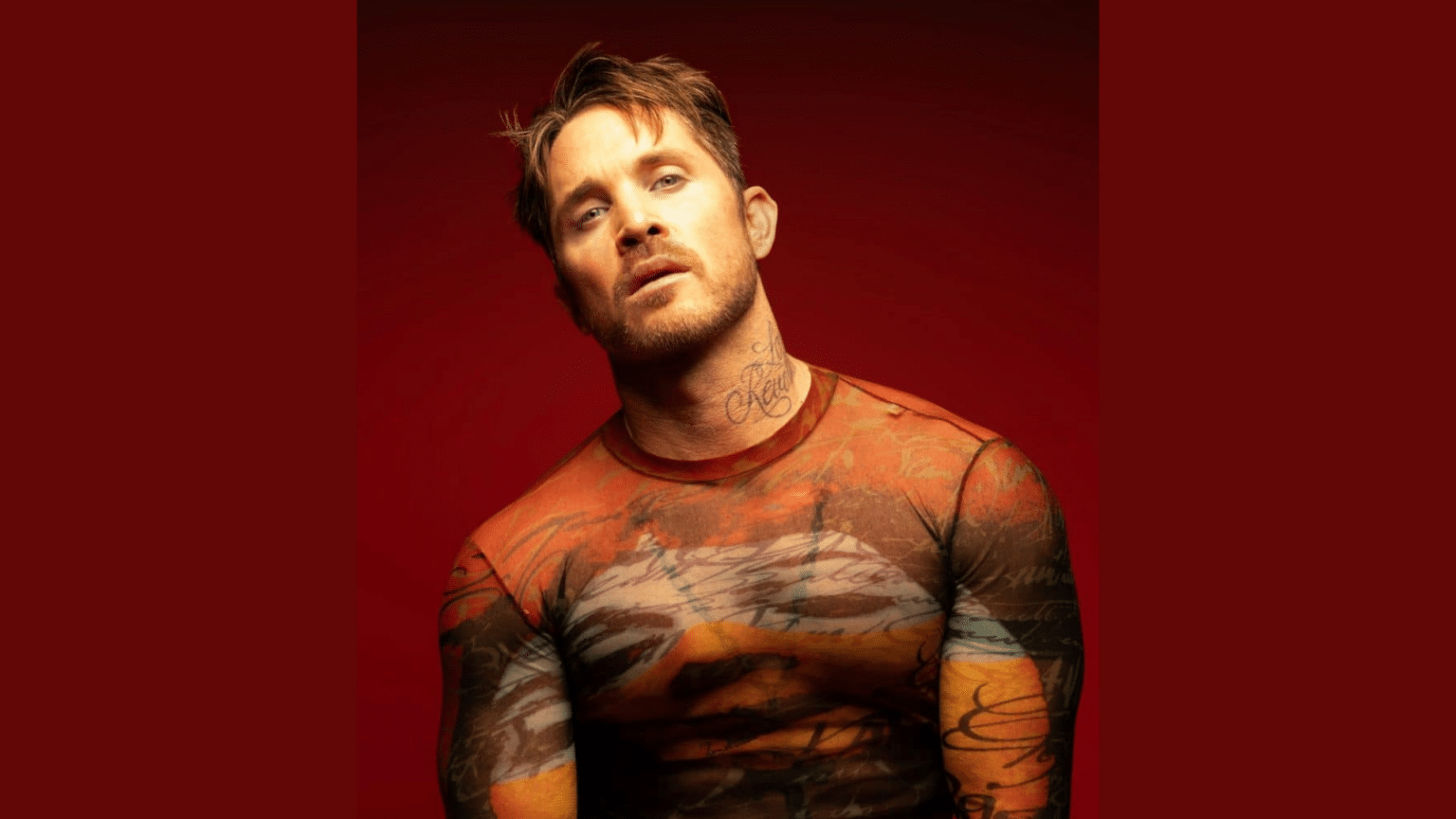
Los Angeles: Blake McGrath, a professional dancer with more than two decades of experience, built his career the old way. At 21, he was touring with Britney Spears. He judged So You Think You Can Dance Canada for four seasons, appeared on Dancing with the Stars as a guest performer multiple times, released five albums after signing with Universal Music at 25, and starred in the Jennifer Lopez-produced MTV reality series DanceLife. The entertainment industry granted him that résumé before social media became central to how performers build audiences.
Two years ago, a video of him rolling out on an airport suitcase changed the economics. Celine Dion reposted it, and brand deals followed, including campaigns with Mastercard, KLM Airlines, Hilton and Cetaphil. Management companies began calling.
“I was so used to going out and making money on the road,” Blake says. “And now they’re like, wait a second, you can put a phone up to yourself for a minute and just talk to the camera and make even more money.”
From Grocery Aisles to the Ocean Floor
The airport was not where Blake’s social media instincts started. That happened in a grocery store, when the song “Conga” came on over the PA system. He propped his phone against a cracker box and started dancing down the aisle. The video got millions of views. He moved the experiment to his kitchen, then to the airport, and the pattern kept reinforcing itself.
The beach video followed that pattern further than anything before it. He fell in. The waves took over. The comment section called him the merman. “I was just going with the flow and being a silly mess and letting the waves take me,” he says.
That result now shapes how he plans content. His biggest moments, he says, share one characteristic: none of them were premeditated.
The Hardest Lesson for a Perfectionist
Blake trained as a dancer from age five and spent decades in rooms where technical precision was non-negotiable. That discipline is, by his own account, one of the things he has had to actively work against.
The shift came from a direct observation by management. “It’s great that they can see these amazing dance videos,” he says. “But at the end of the day, it’s like, who is Blake?” The question pushed him toward content that shows daily life rather than craft: kitchen dancing with his 20-month-old son, Kingston, personal routines, moments that polished performance would crowd out.
He has also had to recalibrate what success looks like at the account level. He believed stacking consecutive high-view videos was the path to brand deals; now he sees the quieter daily content doing structural work that viral moments cannot sustain on their own. “Everything doesn’t need to have that amount of views for you to be a successful brand,” he says.
The Pressure the Numbers Create
That patience has been hard to hold in practice. Tracking engagement proved more corrosive than Blake anticipated. Brand deals arrived in waves and disappeared into months-long dry periods, and the gaps produced anxiety that required real effort to manage.
“I’ve had seasons where brand deals are coming in week after week,” he says. “And then there’s three months of… and I’m like, ‘Oh my God, am I a nobody?'” Learning to manage that anxiety required practice. He meditates, steps away from the phone, and relies on his husband, Taylor, to maintain perspective during lulls. For negative comments, the approach is the same. “Hurt people hurt people,” he says, describing the person behind every hostile message as someone already in pain, worth responding to with kindness rather than reaction.
Fatherhood has given that perspective a harder foundation. Kingston functions as a reset that career setbacks cannot compete with. “If there’s a job that you’re waiting on and you really want it to go through and you don’t get it, you’re not gonna sit in depression for a day,” Blake says. “You gotta go change some diapers.”
What Blake Wants From a Brand
The partnership Blake returns to most often is Bobbie, the first deal that felt like a collaboration rather than a transaction. The company flew the family to New York, put up a billboard in Times Square, and approached the work with a family-like ease from the first meeting. There have been three collaborations, all sustained by that relationship.
The contrast with over-controlling brands is a business argument as much as a creative one. “They dilute the content so much that it gets to this place that I’m not even happy with putting it out,” he says. The outcome, in his view, is predictable: “Maybe showing your product three times instead of eight with multiple millions of views is better than getting 40,000 views and people swiping immediately.” Tightly scripted briefs do not necessarily produce the reach brands are paying for.
Blake prioritises partnerships that feel authentic to his family-first audience and align with his creative vision. He runs the Blake McGrath Mentorship, a four-year-old, 12-week online programme that draws on a faculty of working choreographers and closes each season with a Los Angeles agency audition. His audience spans children and their parents.
Instagram as Home, TikTok as a Vacation
Blake carries more than three million followers across Instagram, TikTok and YouTube, but concentrates mostly on one. “TikTok is a fun place to vacation, and Instagram is my home, and YouTube is like my grandma’s house,” he says. The matched followings and unmatched attention are not, he argues, a miscalculation. They reflect where his audience actually engages with him.
Nearly everything he produces is shot and edited on his iPhone. He has a team of four for coordination and partnerships, but the creative work, from concept to final edit, stays with him. A video he recently describes as a 12-hour shoot and an 8-hour edit came from the same phone and the same solo workflow.
That production model forms the basis of a pitch he is developing with his management team. He wants to make what he calls cinematic commercials — high-concept integrated content shot with a full production team on an iPhone, directed and performed by him. One concept involves a Red Bull campaign shot across New York City, built around slow-motion moments and the brand staying just out of reach until the final moment. The value, as he frames it, is direct: “I’m a one-stop shop.”
The Work That Outlasts the Viral Moment
Blake has returned to vocal classes and added acting lessons, preparing for a potential Broadway role he describes as needing to be the right fit. Hosting is also a near-term interest. Production companies have approached the family about a long-form show, and he has remained selective, prioritising opportunities that celebrate his family’s dynamic because, he says, they want drama he and Taylor aren’t interested in providing. Something with the tone of Queer Eye — positive and family-centred — is what they would consider.
For younger dancers moving through his mentorship, the message converges on a single point. Blake has gone viral hundreds of times, and the sensation lasts about two days. Then comes the pressure to do it again.
“Do not focus on the fame,” he says. “Focus on being great, because greatness will produce, and it will outlast, and it will keep going.”
Blake recently signed with Currents Management.