

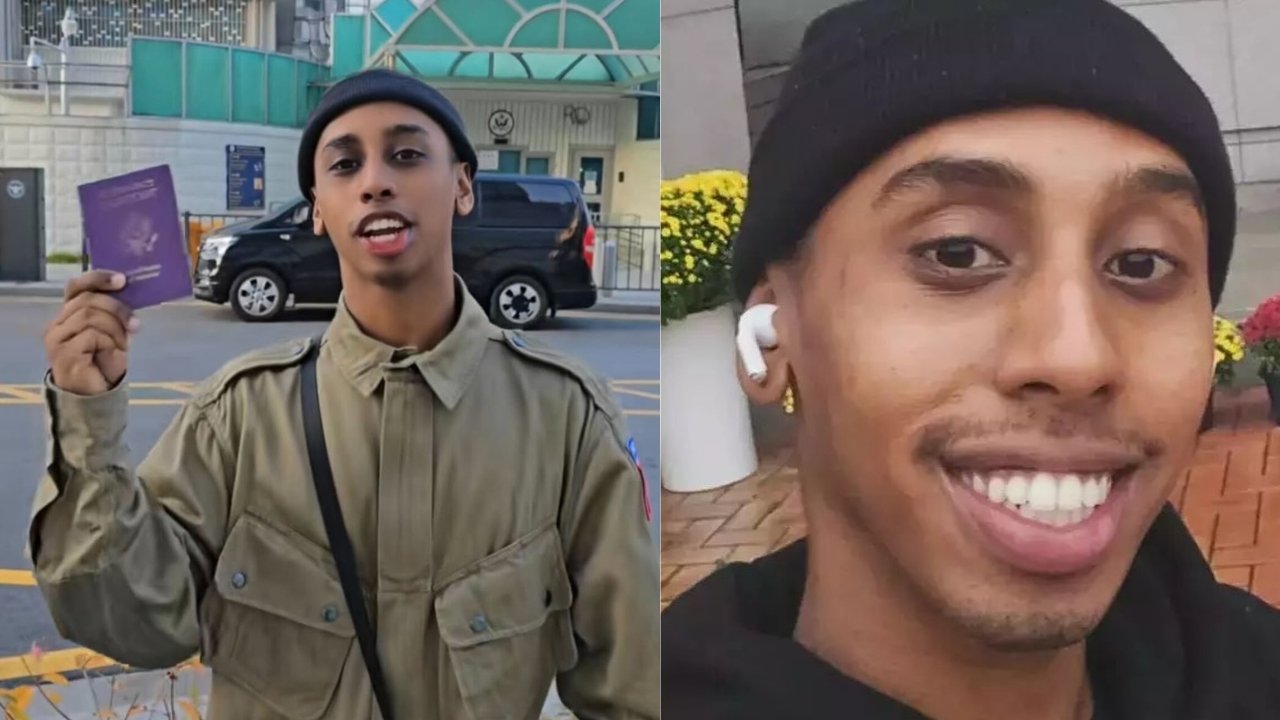
An American livestreamer known as Johnny Somali has been sentenced to six months in prison by a South Korean court for public nuisance offenses, including kissing a statue that commemorates the victims of World War Two sex slavery.
The 25-year-old, whose real name is Ismael Ramsey Khalid, was convicted on Wednesday, April 15, 2026, on multiple charges. He has been barred from leaving South Korea since his arrest in November 2024.
What Did Johnny Somali Do?
Khalid sparked outrage in South Korea after posting a video clip of himself:
- Kissing a statue representing Korean “comfort women” – women and girls forced into sexual slavery by Japanese soldiers during World War II
- Performing lap dances on the same statue
- Vandalizing a convenience store and causing scenes on public transportation
- Streaming obscene videos in public places
- Challenging locals to fight him on several occasions
Social media videos also showed him being punched and chased through the streets by angry residents.
The Court’s Verdict and Sentence
The Seoul court convicted Khalid of being a public nuisance and distributing sexual deepfakes. According to South Korean media, the court stated:
“The defendant repeatedly committed crimes against unspecified members of the public to generate profit via YouTube and distributed the content in disregard of Korean law.”
Prosecutors had sought a three-year prison term, but the judges handed down a lower sentence, noting the “absence of severe harm to victims,” as reported by The Korea Herald.
In addition to the six-month jail term, Khalid has been barred from working with organizations that serve minors and people with disabilities after his release.
Who Are the “Comfort Women”?
During World War II, an estimated 200,000 women across Asia – primarily from Korea, but also China, the Philippines, Indonesia, and Taiwan – were forced into sexual slavery by the Imperial Japanese Army. They were euphemistically called “comfort women.”
Statues depicting a young woman seated in a chair have been installed by activists across South Korea to honor these victims. The statues have long been a source of diplomatic tension between South Korea and Japan, as Seoul continues to demand formal apologies and reparations.
Khalid apologized in November 2024, saying he “didn’t understand the significance of the statue.” However, many online users expressed skepticism about his sincerity.
A Pattern of Provocative Behavior Across Asia
South Korea is not the first country where Khalid has faced legal trouble.
Japan (2023)
- Taunted locals with comments about the atomic bombings of Hiroshima and Nagasaki
- Disrupted business at a restaurant by playing loud music
- Fined 200,000 yen (approximately $1,400)
Israel (2024)
- Detained at a protest in Tel Aviv for making inappropriate remarks toward a female police officer
- Later released without formal charges
Khalid, who has approximately 5,000 followers on YouTube, has been banned from several streaming platforms due to his history of harassing behavior while traveling.
Why This Case Matters
This case highlights several important issues:
| Issue | Significance |
|---|---|
| Respect for local history | Tourists and content creators must understand the cultural and historical weight of monuments, especially those tied to wartime atrocities. |
| Legal consequences for influencers | Provocative stunts for online views can lead to real prison time, not just platform bans. |
| Diplomatic sensitivity | The comfort women issue remains a raw nerve in South Korea-Japan relations. Actions that mock victims can inflame international tensions. |
| Deterrent effect | The six-month sentence sends a clear message that South Korea will not tolerate public nuisance disguised as entertainment. |
Six Months Behind Bars
Johnny Somali’s six-month jail term marks a rare instance of a foreign influencer receiving prison time for content created abroad. While prosecutors had pushed for three years, the court settled on a shorter sentence, noting the lack of severe harm to individual victims.
Nevertheless, the case serves as a warning to digital nomads and shock jockeys: creating offensive content for clicks can have real-world legal consequences. As one South Korean commentator noted, “Freedom of expression does not mean freedom to desecrate the memory of war victims.”
Khalid will remain in South Korean custody for six months, after which he faces possible deportation and continued restrictions on working with vulnerable populations.