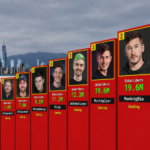


From cinematic storytellers to authentic daily vlogs, these American creators are redefining digital content
Vlogging has evolved dramatically from its early days of shaky handheld videos and bedroom rants. In 2026, American vloggers have transformed personal documentation into sophisticated media brands, blending authenticity with professional production values. These creators have built loyal communities by inviting millions into their daily lives, travels, and creative processes. Here are the ten most influential vloggers in the United States today.
1. MrBeast (Jimmy Donaldson) – The King of YouTube
No list of top vloggers would be complete without MrBeast. With an astonishing 494 million subscribers as of June 2026, Jimmy Donaldson is not only the most-subscribed YouTube channel in the world but also the most-viewed American creator, pulling in over 1.24 billion weekly views during peak weeks .
While MrBeast is known for his high-production stunt videos and charitable giveaways, his content functions as extreme vlogging—documenting elaborate challenges, massive philanthropic efforts, and behind-the-scenes glimpses of a production empire. His influence extends beyond YouTube, with Feastables chocolate bars and burger chains cementing his status as a bona fide media mogul.
What sets MrBeast apart is his understanding of what makes viewers click. Each video is meticulously engineered for maximum engagement, yet his genuine enthusiasm and larger-than-life personality keep the content feeling authentic rather than manufactured.
2. Emma Chamberlain – The Relatable Icon
Emma Chamberlain has become the blueprint for modern aesthetic vlogging. With 12 million subscribers, Chamberlain turned mundane daily activities into compelling content through her signature editing style—jump cuts, zoom-ins, and confessional narration that felt revolutionary when she emerged in 2017 .
Today, Chamberlain has evolved beyond daily vlogs into a multimedia brand. Her YouTube channel now features approximately one video per month, averaging 29 minutes of minimalist daily vlogs, personal commentary, lifestyle reflections, and mental health discussions .
Her influence, however, transcends YouTube. Chamberlain Coffee, her owned brand, has become a significant revenue stream alongside luxury partnerships with Louis Vuitton, Calvin Klein, and Lancôme. Her podcast “anything goes with emma chamberlain” generates additional income, contributing to her estimated $30 million net worth . For Gen Z audiences, Chamberlain represents the aspirational yet achievable lifestyle—successful but still awkward, glamorous but still real.
3. Casey Neistat – The Cinematic Pioneer
Casey Neistat essentially invented the modern cinematic vlog. With 12.6 million subscribers, Neistat transformed daily vlogging into an art form, combining skateboarding, travel, fatherhood, and creative commentary into visually stunning 9–15 minute episodes .
Neistat’s influence on the vlogging format cannot be overstated. Before Neistat, daily vlogs were typically low-production affairs. He demonstrated that a vlog could have narrative arcs, drone shots, and Hollywood-style editing while still feeling spontaneous and personal.
His estimated yearly income reaches $3–4 million through YouTube ad revenue, brand partnerships with Samsung, Nike, Ray-Ban, and Coinbase, as well as startup equity and his company Beme, which sold to CNN . Even with less frequent uploads now, Neistat remains the patron saint of creative vloggers worldwide.
4. PewDiePie (Felix Kjellberg) – The Original Mega-Vlogger
While PewDiePie originally built his following through gaming commentary, his transition to lifestyle vlogging has proven equally successful. With 110 million subscribers, Kjellberg remains the most financially successful creator on this list, with an estimated net worth of $40–50 million .
His current content focuses on slow living, fatherhood, and authentic daily life reflections. Uploading one to three times per month with videos averaging 28 minutes, PewDiePie has cultivated an audience that values his evolution from bombastic gamer to thoughtful family man .
What makes PewDiePie remarkable is his audience loyalty. Despite fewer brand sponsorships than many creators his size, his audience engagement remains unmatched. He represents the rare creator who can pivot his entire content strategy without losing his core following.
5. Yes Theory – The Movement-Driven Collective
Yes Theory, created by Thomas Brag, Ammar Kandil, Matt Dahlia, and Derin Emre, has turned lifestyle vlogging into community-driven content. With 9.83 million subscribers, this American-based collective produces challenge-based vlogs centered on seeking discomfort, human connection, and global adventures .
Their videos, ranging from 25 to 35 minutes with approximately two uploads per month, feature social experiments, extreme travel challenges, and heartwarming stories of human connection. Unlike solo vloggers, Yes Theory benefits from the dynamic chemistry between its four core members.
Their monetization strategy extends beyond AdSense. The SEEK DISCOMFORT merchandise line and brand integrations with Airbnb, Google, and Shopify have built a sustainable business model. Yes Theory proves that vlogging can be about something bigger than individual fame—it can inspire movement and community.
6. Zoe Sugg (Zoella) – The OG Lifestyle Vlogger
Zoe Sugg, known as Zoella, is one of YouTube’s original lifestyle icons. While her peak upload frequency has decreased, she still commands 10.5 million subscribers across her channels .
Her current content focuses on home lifestyle, mental health, slow living vlogs, and seasonal routines, with videos averaging 48 minutes in length. Sugg has masterfully transitioned from the frantic, high-energy content of YouTube’s early days to a more mature, reflective style that resonates with her aging audience.
Despite stepping back from aggressive monetization, Sugg still collaborates selectively with Marks & Spencer, Boots, and UK lifestyle brands. Her estimated net worth of $5–7 million was built on early YouTube dominance and long-term brand equity . She represents longevity in an industry where most creators burn out within five years.
7. Alisha Marie – The Creator’s Creator
Alisha Marie has transitioned from teen lifestyle content into sophisticated creator-focused lifestyle storytelling. With 7.99 million subscribers, her channel features lifestyle resets, productivity content, daily routines, and behind-the-scenes glimpses of creator life .
Uploading one to two times per month with videos averaging 16 minutes, Alisha has built a loyal following that values practical advice alongside entertainment. Her podcast “Pretty Basic” has become a significant revenue stream, rivaling her YouTube income.
Her estimated net worth exceeds $6–8 million, built through regular partnerships with Google, Target, Audible, and Samsung . Alisha represents the vlogger who successfully diversified beyond a single platform.
8. Kara and Nate – The Travel Vlog Experts
Kara and Nate have built a full-time travel business through consistent, high-quality vlogging. With 4.36 million subscribers, this couple produces weekly travel lifestyle content focused on minimalist living, daily routines on the road, and immersive destination experiences .
Their videos average 21 minutes, with one upload per week maintaining steady audience engagement. What distinguishes Kara and Nate is their systematic approach to travel vlogging—they treat their channel as a business, with detailed planning and professional production values.
Their estimated net worth of $7–10 million comes from YouTube ad revenue, affiliate links (particularly credit card partnerships), and brand sponsors . They demonstrate that couples can successfully collaborate professionally without burning out.
9. Matt D’Avella – The Minimalist Vlogger
Matt D’Avella carved out a unique niche by combining vlogging with documentary-style filmmaking. With 4 million subscribers, D’Avella focuses on minimalism, habits, lifestyle design, and long-term personal experiments .
His upload schedule is deliberate—approximately one video per month, averaging 19 minutes. This scarcity, counterintuitively, builds anticipation. D’Avella’s background as a filmmaker (he directed the minimalism documentary for Netflix) gives his vlogs a polished, cinematic quality absent from most daily content.
His estimated net worth of $3–4 million comes from YouTube ad revenue, courses, digital products, and brand deals with Notion, Skillshare, and Squarespace . D’Avella proves that vlogging doesn’t require daily uploads—quality and niche authority can trump quantity.
10. Mia Maples – The Lifestyle Experimenter
Mia Maples has built 4.71 million subscribers through engaging lifestyle experiments, budget challenges, and home-focused content . Uploading approximately once per week with videos averaging 34 minutes, Maples has cultivated an advertiser-friendly channel that appeals to a broad demographic.
Her content includes fashion try-ons, home renovations, budget living challenges, and routine vlogs. What makes Maples effective is her genuine enthusiasm and willingness to try anything—from living on a budget for a week to attempting complex DIY projects.
Her revenue streams include YouTube ad revenue ($14,000–$41,000 monthly), affiliate links, and brand sponsorships with Casper, Article, and Brooklinen . Maples represents the accessible vlogger—she doesn’t pretend to have a perfect life, which makes her content relatable and trustworthy.
Honorable Mentions
The American vlogging landscape extends beyond this list. Korina Bao has built 504,000 subscribers with productivity and lifestyle vlogs, maintaining an impressive 7.63% engagement rate . Nikki Delventhal, a former model turned full-time adventure traveler, has grown to 960,000 subscribers with vanlife content .
The Bliss Bean reaches 289,000 subscribers with productivity and self-improvement vlogs, while McKenna Walker has built 465,000 subscribers sharing her journey as a young mother . In the travel niche, Buddy’s DIY has amassed 796,000 subscribers with car flipping and travel content .
Cocomelon, while primarily a children’s channel, deserves mention as the second most-subscribed American channel with 201 million subscribers . Similarly, Vlad and Niki (150 million subscribers), Stokes Twins (140 million), and Kids Diana Show (138 million) represent American-based family vlogging at massive scale .
The Evolution of American Vlogging
What these ten vloggers demonstrate is that success in 2026 requires more than just a camera and a personality. The most successful American vloggers have evolved into media entrepreneurs, building diversified businesses across merchandise, podcasts, brand deals, and owned products.
MrBeast turned YouTube fame into a snack food empire. Emma Chamberlain built a coffee brand. Yes Theory created a merchandise movement. PewDiePie achieved generational wealth through audience loyalty.
The days of casual vlogging as a hobby are gone. Today’s top vloggers treat their channels as serious businesses—with production teams, strategic partnerships, and long-term brand building. Yet the best among them maintain the authenticity that made vlogging compelling in the first place: the sense that we’re watching real people live real lives, even when those lives are anything but ordinary.