

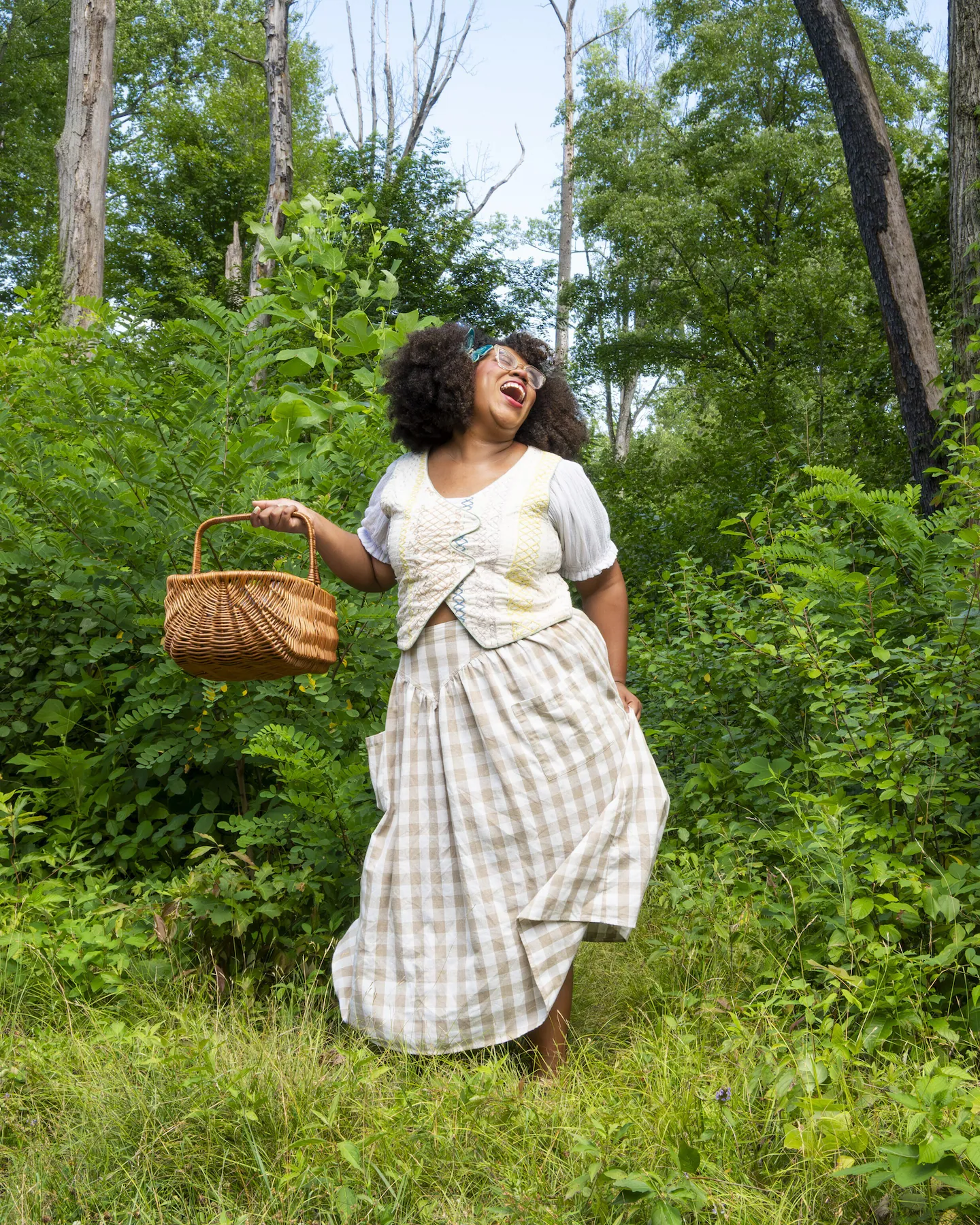
Columbus, Ohio: When Alexis Nikole Nelson was 5 years old in Cincinnati, her mother taught her about the edible weeds in their yard. She learned about different plants in her neighbourhood, sometimes bringing them in to help her father cook them into meals.
Three decades later, Nelson — known online as Black Forager — has amassed millions of followers across TikTok, Instagram and YouTube, won a James Beard Award, published a New York Times bestselling cookbook, and become the most recognisable voice in a foraging revival .
‘Don’t Die’
Her signature sign-off is equal parts playful and ominous: “Happy snacking, don’t die!” It is only half a joke. “Some plants that are delightful for eating can, to an untrained eye, look really similar to a plant that will make you sick or take you down for the count,” she told National Geographic. “Every year I have to tell people the difference between Queen Anne’s lace, which is wild carrot, and poison hemlock, which killed Socrates” .
On a walk through Columbus’s Scioto Audubon Park, she pointed out poison ivy and pokeweed, whose berries might tempt a novice. “Never eat pokeweed raw,” she said .
Foraging as Reclamation
Nelson’s work is as much about history as it is about food. She teaches that foraging was a crucial survival skill for enslaved people, with knowledge shared between Indigenous and Black communities. After emancipation, many localities criminalised trespassing — meaning those who did not own land could be arrested for foraging, fishing or trapping on it, and the tradition largely fell away in Black communities .
Her father’s family moved from the South to Ohio during the Great Migration, which severed the direct passing down of place-specific plant knowledge. “They can’t walk you through the same places that they were walked through as children,” she told the Columbus Dispatch .
Climate Change, Witnessed from the Ground
Being a forager, Nelson says, gives you a boots-on-the-ground view of a warming planet. “I’m seeing plants emerge weeks earlier than they did just three to five years ago. One popular native allium used to appear in early April; this year, it started poking through the ground in mid-March,” she told Katie Couric Media .
She worries about what that means for other species. Migratory birds rely on a mental map of foods along their route; if those foods ripen and vanish before the birds arrive, populations can suffer. “The more you forage, the more attuned you become to your local environment and the more you want to protect it” .
You Don’t Need the Woods
Nelson’s core message is accessibility. “You do not have to go much further than your own front doorstep in order to start your foraging practice,” she told KUOW. “If you are waiting to feel ready to do something… you’re just gonna be waiting for the rest of your life” .
Her advice for beginners: pick one plant near your home, learn it through its full life cycle, and taste only a little at first. “Sometimes I will build a relationship with a plant or fungi for years before I feel confident enough to start integrating it into the kitchen,” she said at Tufts University .
The Cookbook
Her debut, Happy Snacking, Don’t Die!, released September 22, 2026, is both a foraging guide and a vegan cookbook, organised by season. It grew from a practical problem: followers wanted her recipes but couldn’t find old videos when ingredients came back into season .