

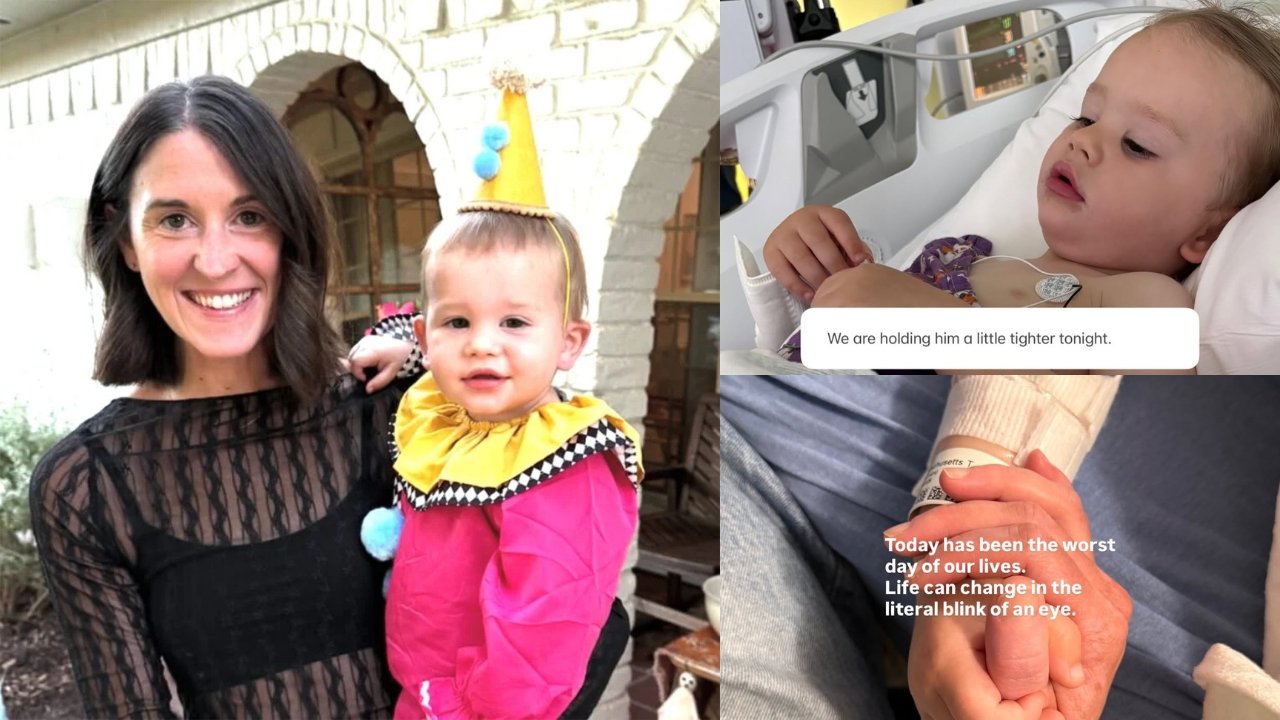
A motherhood content creator told her Instagram followers this week that she accidentally ran over her son with her car, leaving him hospitalized with fractures. Kelly Hopton-Jones, a 36-year-old stay-at-home mother of two and pediatric nurse practitioner, said what started as a normal day became “the worst day of our lives.”
Hopton-Jones described the incident in a detailed Instagram carousel post, sharing both the harrowing details of the accident and her family’s journey through shock, grief, and ultimately gratitude for their son’s recovery.
What Happened – A Matter of Seconds
According to Hopton-Jones’s post, she was planning to drive her daughter to grab doughnuts before a dance performance. Her husband, Brian , and their 23-month-old son, Henry , were supposed to stay home and meet up with them later.
“In a matter of seconds our son was run over by our car. I was driving,” she wrote.
The family was waving goodbye to each other when the accident occurred. The exact mechanism of how Henry ended up behind or under the vehicle was not detailed, but the outcome was devastating.
The Immediate Aftermath
The parents left their daughter, Lily , with neighbors and rushed Henry to the hospital.
Initial Medical Findings
| Injury | Status |
|---|---|
| Pelvis | Fractures |
| Abrasions | Present |
| Legs, chest, neck X-rays | Normal |
| CT scan (organs, spinal cord) | No injury |
| Neurological exam | Reassuring – no signs of head injury or impairment |
“What stays with me is the doctor saying: ‘He is hurt, but this is something he can recover from.’ A true miracle,” Hopton-Jones wrote.
‘The Lucky Side of a Very Tragic Accident’
Hopton-Jones, whose Hillside Farmhouse account has nearly 65,000 followers , wrote that her family is in shock and sad. But she believes they’re on “the lucky side of a very tragic accident.”
Medical Perspective
As a pediatric nurse practitioner, Hopton-Jones brings professional knowledge to her personal tragedy. Her assessment of Henry’s injuries and prognosis carries additional weight given her medical background.
Emotional State
The influencer was candid about the emotional toll:
- Shock
- Sadness
- Gratitude for her son’s survival
- Guilt (implicit in describing her role as the driver)
Mixed Reactions – Support and Criticism
The comments on Hopton-Jones’s post include mixed opinions , particularly about her decision to post content the same day her son was hospitalized.
Supportive Voices
| Commenter | Response |
|---|---|
| Emilie Kiser (influencer whose son died by accidental drowning in May 2025) | “I’m so incredibly sorry.” |
| Other followers | Expressed sympathy and shared similar stories |
Critical Voices
Some commenters questioned:
- Why she was posting on social media while her son was hospitalized
- Whether sharing such personal trauma was appropriate
- The timing of the post (same day as the accident)
Hopton-Jones did not directly address the criticism but continued to share updates on Henry’s condition.
A Message for Other Parents – ‘Accidents Happen’
Rather than simply sharing her family’s trauma, Hopton-Jones used the platform to offer safety advice to other parents. She described the accident as something that can happen to parents even when they’re “not distracted” or “not rushing.”
Her Safety Recommendations
“Non negotiable to hold or hold hands with young children around vehicles. Do not assume they know or will stay where you last saw them.”
| Recommendation | Why It Matters |
|---|---|
| Hold hands around vehicles | Young children are unpredictable |
| Don’t assume they’ll stay put | Toddlers can move quickly into danger zones |
| Learn from mistakes | “The only mistakes are the ones we don’t learn from” |
“Accidents happen, and the only mistakes are the ones we don’t learn from,” she wrote in the caption.
The Statistics – A Silent Epidemic
Hopton-Jones’s story is not an isolated incident. According to Kids and Car Safety , a national nonprofit group:
| Statistic | Number |
|---|---|
| Children backed over by cars every week in the US | 50 |
| Percentage where parent or close relative is driving | 70% |
These “backover” accidents often happen in driveways or parking lots when a driver cannot see a small child behind or in front of the vehicle.
Risk Factors
| Factor | Explanation |
|---|---|
| Blind zones | Many SUVs and trucks have large blind spots behind them |
| Young children | Toddlers may not understand vehicle danger |
| Busy parents | Distractions, multiple children, tight schedules |
| Predictable patterns | Accidents often happen during routine departures |
The Influencer’s Dilemma – Sharing Trauma Online
Hopton-Jones’s decision to post about the accident raises broader questions about influencers and personal trauma.
Arguments for Sharing
| Reason | Explanation |
|---|---|
| Awareness | Can prevent similar accidents |
| Community support | Followers offer comfort and help |
| Normalizing struggle | Reduces isolation for other parents |
| Documentation | A record of the family’s journey |
Arguments Against Sharing
| Reason | Explanation |
|---|---|
| Privacy | Child cannot consent to having trauma shared |
| Timing | Should the focus be on healing, not content? |
| Exploitation | Risk of appearing to profit from tragedy |
| Mental health | Processing trauma publicly may not be healthy |
Hopton-Jones, as a pediatric nurse practitioner, may feel a professional obligation to share safety information. But the criticism suggests not all followers agree with her approach.
What’s Next for the Hopton-Jones Family
Henry is expected to recover fully, though his pelvis fractures will require time to heal. The family has not indicated whether they will pursue any legal or advocacy actions following the accident.
Hopton-Jones continues to post updates on her Hillside Farmhouse Instagram account, balancing:
- Henry’s recovery progress
- Gratitude for medical staff
- Safety reminders for other parents
- Daily family life
A Miracle and a Warning
Kelly Hopton-Jones’s story is both a miracle and a warning. A 23-month-old boy survived being run over by a car – a testament to modern medicine and, as his mother puts it, “a true miracle.”
But the accident should never have happened. And Hopton-Jones knows that. Her decision to share the story publicly – despite mixed reactions – appears driven by a desire to prevent other families from experiencing the same horror.
“Non negotiable to hold or hold hands with young children around vehicles,” she wrote.
It is simple advice. But for Henry, and for the 50 children backed over every week in America, it could be life-saving.
As Hopton-Jones said: “The only mistakes are the ones we don’t learn from.” Her family has learned. Now, she wants others to learn too.