

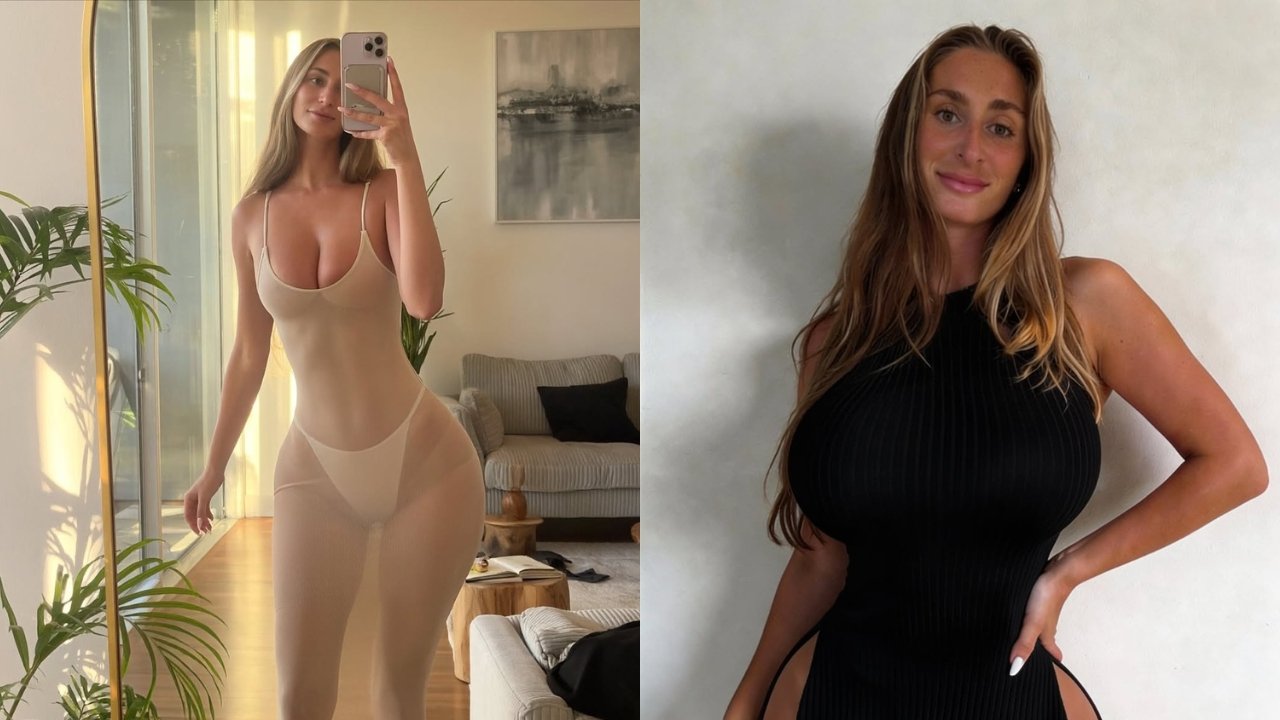
Ruby Reid has nearly one million followers across social media, brand deals with FashionNova and PrettyLittleThing , and the kind of engaged audience most creators spend years trying to build. She also recently overhauled the way she runs her Instagram. If you follow her and didn’t notice, that was by design.
The Miami-based content creator now runs her main account through an AI-powered backend that handles post scheduling, content optimization, and distribution – essentially automating the parts of the job that used to eat up most of her day.
“I was spending hours every day just trying to keep up with the algorithm,” Reid said in a statement on Monday, April 13, 2026. “At some point I realized I was working for Instagram instead of Instagram working for me. So I started looking into AI tools that could handle the heavy lifting without losing my voice.”
What Reid’s AI System Does
Reid’s AI setup is not about generating fake content or impersonating her. Instead, it handles the operational heavy lifting of being a full-time influencer.
| Task | AI Role |
|---|---|
| Post scheduling | Determines optimal timing for engagement |
| Content optimization | Analyzes what performs best |
| Distribution | Cross-platform posting management |
| Analytics | Tracks performance and adjusts strategy |
“The biggest creators in the world have entire media teams managing their pages,” Reid said. “I wanted that same level of output without the overhead. AI gave me a way to compete with people who have ten times my resources.”
Why She Made the Switch – ‘Working for Instagram’
Reid’s frustration is one many creators share: the algorithm demands constant attention.
| Problem | AI Solution |
|---|---|
| Hours spent daily on engagement | Automation reduces time commitment |
| Unpredictable algorithm changes | AI adapts posting strategy |
| Burnout risk | Less manual work, more creative energy |
| Competition with big teams | AI levels the playing field |
“I was spending hours every day just trying to keep up with the algorithm. At some point I realized I was working for Instagram instead of Instagram working for me.”
The Bigger Picture – Virtual Influencers and AI Growth
Reid’s move puts her ahead of a shift that has been building across the industry. The global virtual influencer market was valued at $6 billion in 2024 and is projected to reach nearly $46 billion by 2030.
CGI Influencers vs. AI-Assisted Real Influencers
| Type | Example | Approach |
|---|---|---|
| CGI/virtual influencer | Lil Miquela (Prada, Calvin Klein; ~$2M/year) | Fictional persona designed by agency |
| AI-assisted real influencer | Ruby Reid | Real person using AI for operations |
CGI characters like Lil Miquela have already proven that AI-driven content can generate real engagement and real revenue. But those are fictional personas designed in a boardroom. Reid is a real person using the same kind of technology to scale something she built from scratch.
The AI Anxiety – ‘Everyone’s Talking About AI Replacing Influencers’
Reid acknowledged the elephant in the room: fear of AI replacing human creators.
“Everyone’s talking about AI replacing influencers,” Reid added. “And I’d be lying if I said that wasn’t on my mind too. When you see companies paying CGI characters millions of dollars a year, it makes you think.”
But instead of fighting the trend, she chose a different path:
“But instead of fighting it, I leaned into it. And honestly, the perks have been kind of insane. I’m creating more, stressing less, and my page has never looked better.”
| Response to AI Fear | Reid’s Approach |
|---|---|
| Resistance | Fighting the trend |
| Acceptance | Leaning into AI tools |
| Integration | Using AI to enhance human creativity |
The Results – ‘Creating More, Stressing Less’
Reid reports significant benefits from her AI-powered system:
| Benefit | Result |
|---|---|
| More creation time | Less time on scheduling/analytics |
| Reduced stress | Algorithm management automated |
| Improved page quality | Consistent, optimized posting |
| Competitive edge | Output comparable to larger teams |
“I’m creating more, stressing less, and my page has never looked better.”
Industry Context – The Rise of AI in Influencer Marketing
Reid’s announcement comes amid rapid changes in the influencer industry.
Key Trends
| Trend | Implication |
|---|---|
| Virtual influencers | Brands paying CGI characters millions |
| AI content tools | Text, image, video generation improving rapidly |
| Automated management | Scheduling, analytics, optimization |
| Creator burnout | High rates of mental health struggles |
The global virtual influencer market is projected to grow from $6 billion (2024) to $46 billion (2030) – nearly an 8x increase. Reid is positioning herself to thrive in that environment rather than be displaced by it.
What This Means for Followers – Authenticity Questions
Reid’s revelation raises questions for her nearly one million followers:
| Question | Reid’s Implied Answer |
|---|---|
| Is she still posting? | Yes, but AI helps with timing and optimization |
| Is her voice authentic? | She claims the AI preserves “my voice” |
| Is she still engaging? | AI handles distribution; she likely still creates core content |
| Should followers care? | Depends on whether they value human touch or just content |
Reid was careful to note that the AI tools handle the operational heavy lifting – not the creative essence. She is not a CGI character. She is a real person using technology to work smarter.
The Future – More Influencers Will Follow
Reid may be early, but she is unlikely to be alone. As AI tools become more sophisticated and accessible, more creators will likely:
- Automate scheduling and distribution
- Use AI for content optimization
- Leverage analytics for strategy
- Reduce manual workload
The question is whether followers will accept AI-assisted influencers as readily as fully human ones. For now, Reid’s page “has never looked better” – and her audience hasn’t noticed the change.
Leaning In, Not Fighting Back
Ruby Reid’s decision to run her Instagram using AI tools represents a pragmatic response to the changing influencer landscape. She saw CGI characters earning millions, algorithm changes eating her hours, and burnout looming. Instead of resisting, she adapted.
“Instead of fighting it, I leaned into it.”
The result, she says, is more creation, less stress, and a better-looking page. For other influencers facing the same pressures, Reid’s experiment offers a possible blueprint.
Whether followers will embrace AI-assisted influencers remains an open question. But for now, Ruby Reid is proving that the future of influence might not be human vs. AI – but human plus AI.