

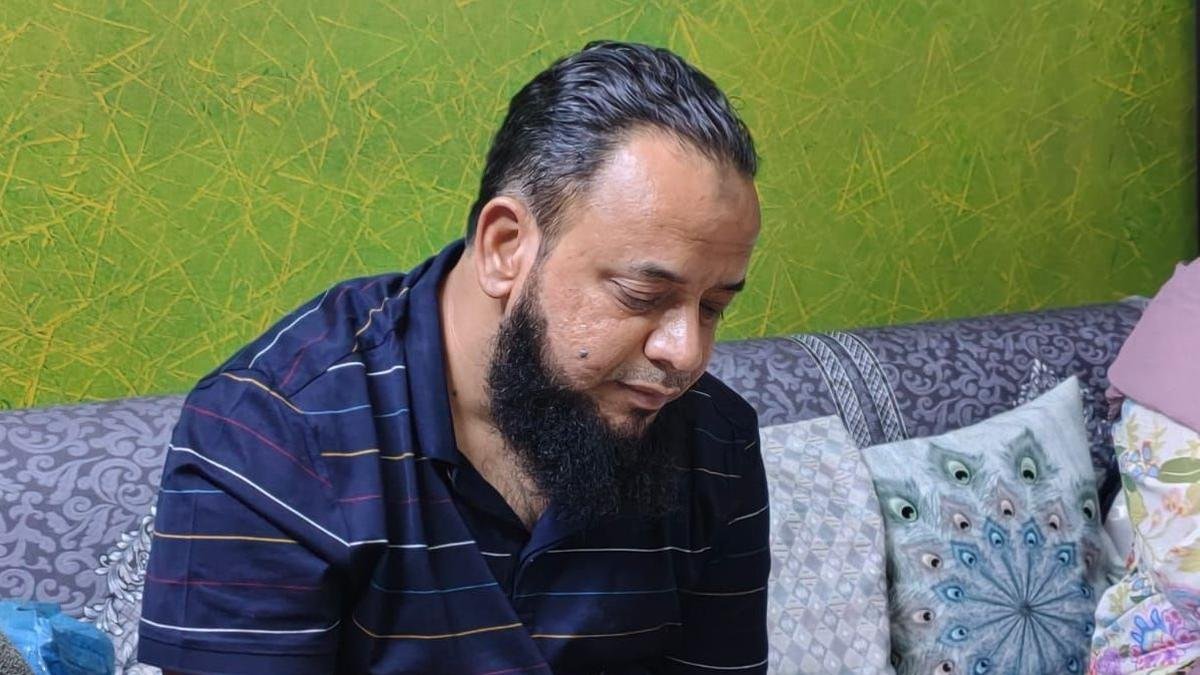
The Supreme Court on Wednesday indicated that it was prima facie inclined to grant bail to 2020 Delhi riots accused Tasleem Ahmed and Abdul Khalid Saifi, while adjourning the hearing at the request of the Delhi Police.
A Bench of Justices Aravind Kumar and P.B. Varale heard the bail pleas challenging the Delhi High Court’s September 2, 2025 order refusing them bail in the larger conspiracy case linked to the February 2020 riots.
What the Court said
“Prima facie, we are with you for the time being, subject to what he [Additional Solicitor General S.V. Raju] says,” the Bench orally remarked while hearing the pleas.
Senior advocate Rebecca John, appearing for Saifi, submitted that her client’s case was squarely covered by the Bench’s January 5, 2026 ruling. In that judgment, the Court denied bail to JNU scholars Umar Khalid and Sharjeel Imam while granting relief to five other co-accused after distinguishing their alleged roles.
“I am only relying on your Lordships’ judgment,” John told the Bench.
Advocate Mehmood Pracha, appearing for Ahmed, similarly contended that his client had only a peripheral role. “I am that poor person who is actually the sidekick of a sidekick. All three of my principals have been granted bail by this Court. I fall squarely within the four corners of my Lords’ judgment,” he submitted.
Conflicting UAPA bail rulings
The Delhi Police, represented by ASG S.V. Raju, sought time to make submissions citing “conflicting” views expressed by different Supreme Court Benches on bail under the Unlawful Activities (Prevention) Act (UAPA).
Raju referred to a May 18 judgment delivered by a Bench headed by Justice B.V. Nagarathna, which held that “bail is the rule and jail is an exception” even in prosecutions under stringent anti-terror laws like UAPA.
That judgment also expressed “serious reservations” about the January 5, 2026 ruling denying bail to Khalid and Imam, including the direction restraining them from seeking bail for one year. The Bench observed that the ruling failed to correctly apply the binding principles laid down by a larger three-judge Bench in Union of India v. K.A. Najeeb (2021), which held that prolonged incarceration and delay in trial could override the stringent bail bar under Section 43D(5) of UAPA.
Raju submitted that the divergent views may require consideration by a larger Bench.
The Bench asked Raju whether he was arguing that the coordinate Bench had committed an error. Raju responded, “That may be my submission, provided I read the judgment. I have not read the judgment because I did not have time.”
Adjournment and next hearing
The Court posted the matter for hearing on May 22, 2026, and asked Raju to make submissions on that date.
Background of the case
Ahmed and Saifi are among the accused in the larger conspiracy case related to the February 2020 Delhi riots, which left 53 people dead and over 700 injured. The violence erupted during protests against the Citizenship (Amendment) Act (CAA) and the National Register of Citizens (NRC).
The Delhi High Court on September 2, 2025, had dismissed their bail pleas, saying “delay in trial” cannot be the sole ground for consideration. It had said that except in cases of palpable violation of fundamental rights or breach of constitutional rights, bail cannot be granted on the sole factor of long incarceration.
Both accused have been in custody since 2020, completing over five years of incarceration.
What happens next
The Supreme Court will hear the matter on May 22, 2026. If the Bench grants bail, it would add to the growing list of co-accused who have been released following the January 5 ruling that distinguished between “active conspirators” and those with “peripheral roles.”
However, the Delhi Police’s request to highlight conflicting UAPA bail rulings could potentially lead to a reference to a larger Bench, delaying the final outcome.