

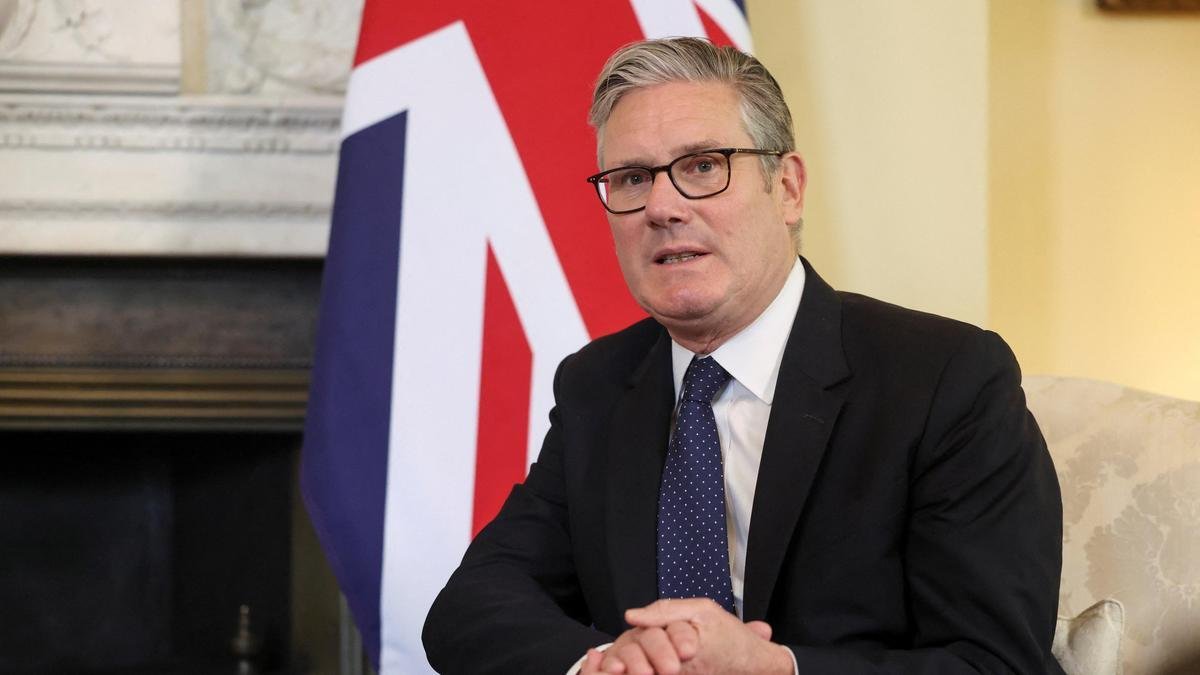
British Prime Minister Keir Starmer on Monday announced a forthcoming ban on social media for all children under the age of 16.
Speaking at a Downing Street press conference, Starmer said that “the government will ban access to social media for all children under the age of 16.”
He said he would introduce sweeping changes to social media regulation to better protect the wellbeing of children when they are online.
“It is clear to me a full ban is the right choice,” he said, adding that while it would not be easy, the government had agency in pushing back against the power of big technology companies.
Growing concerns over children’s mental health
Britain has increasingly toughened its approach to tech companies in recent years, urging or forcing them to impose age verification, adapt their algorithms and, most recently, prevent children from circulating nude images taken on mobile phones.
But with a growing awareness of the mental health risks posed by children spending too much time online, Starmer has decided to go further after speaking to parents and considering evidence from Australia, which brought in a ban for under-16s last year.
Starmer, who is likely to face a leadership challenge in the coming weeks, said people rightly expected action.
Australia leads the way
Australia was the first country to ban social media for children under 16, blocking them in December from platforms including TikTok, Alphabet’s YouTube and Meta’s Instagram and Facebook.
Since then, a raft of countries have said they are looking to regulate access to social media amid mounting concerns over the impact on children’s health and safety.
Public consultation shows overwhelming support
Britain consulted teachers, parents and young people on new restrictions, including a possible ban for under-16s, as well as curfews, app time limits and curbs on what the government has described as addictive design features.
It received more than 116,000 responses from parents, industry and young people. More than 83% of parents who responded said risks from social media outweighed benefits, while 90% backed a minimum age of 16 to access social media platforms.
Opposition and concerns
While many parents and politicians back a ban, some psychologists and researchers have said there is no proof that it would work. A group of school children in London told Reuters they had a conflicted relationship with the technology – recognizing both its benefits and harms.
The ban represents one of the most significant regulatory actions against social media platforms globally, following Australia’s pioneering move. Implementation details and enforcement mechanisms are expected to be announced in the coming months.