

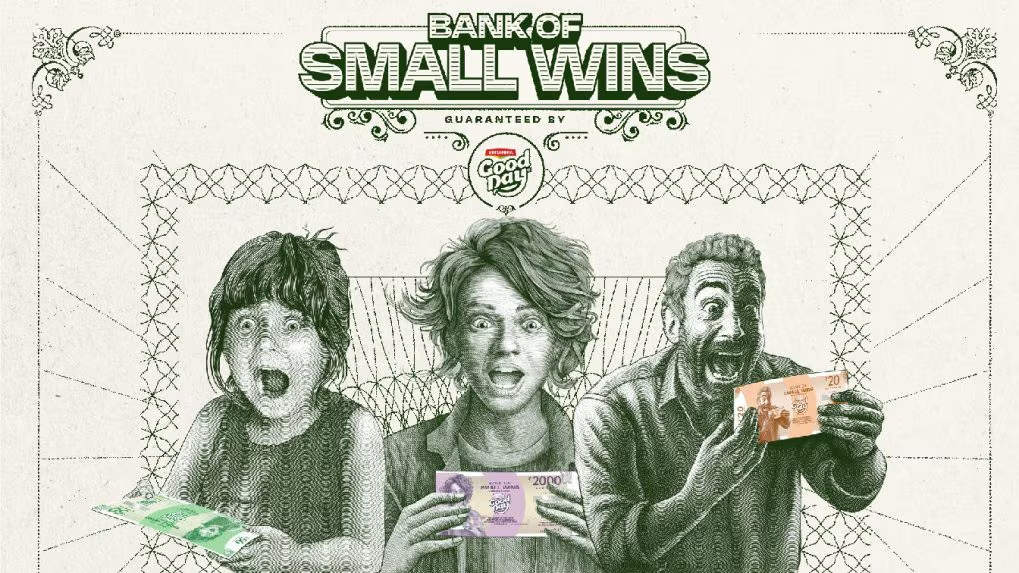
For decades, the biscuit aisle was built on habit : tea-time staples, family packs and mass-market advertising.
But at Britannia Industries , executives now speak less about biscuits and more about “experiences,” premiumization and impulse-led consumption aimed squarely at younger consumers.
On the company’s latest earnings call, Britannia executives described a changing consumer landscape in which categories like brownies, wafers and indulgent snacks are increasingly being positioned as lifestyle products rather than pantry essentials.
“This is really a Gen Z-focused brand,” Rakshit Hargave , Britannia’s chief executive, said while discussing Fudge It , the company’s cake and confectionery brand that was promoted heavily around Valentine’s Day.
The Shift: From Pantry Staples to Lifestyle Products
The strategy reflects a broader shift sweeping India’s consumer goods industry, where snack makers are racing to capture younger urban consumers whose purchasing habits are increasingly shaped by social media, quick-commerce apps and impulse buying.
Britannia executives repeatedly emphasized “consumer engagement,” “brand activations” and premium categories that travel well across digital platforms.
The company highlighted strong momentum behind signature brands like Treat, Little Hearts and Jim Jam , which executives said were growing at nearly three times the company average.
Britannia also pointed to rapid growth in categories like croissants, brownies and wafers — products that are increasingly marketed as indulgent snacks rather than low-cost staples.
Gen Z Wants Experiences, Not Just Biscuits
The headline quote — “Gen Z wants experiences, not just biscuits” — captures the essence of Britannia’s new approach.
For previous generations, a biscuit was a biscuit: a tea-time accompaniment, a lunchbox filler, a low-cost snack.
For Gen Z, the product itself is only part of the equation. They also care about:
- How the brand presents itself on social media
- Whether the packaging is Instagram-worthy
- What the brand stands for (values, sustainability, inclusivity)
- The “vibe” of the product and its marketing
A biscuit is no longer just a biscuit. It is an experience.
Fudge It: A Gen Z-Focused Brand
Fudge It, Britannia’s cake and confectionery brand, was promoted heavily around Valentine’s Day — an occasion that resonates strongly with younger consumers.
Hargave explicitly called it “a Gen Z-focused brand.” This is significant because it marks a departure from Britannia’s traditional marketing, which focused on family, trust, and nostalgia.
Fudge It is about indulgence, gifting, and sharing — not about tea-time routines or family packs.
The Numbers: 3X Growth for Treat, Little Hearts, Jim Jam
Britannia’s traditional “mass-market” brands — Treat (biscuits), Little Hearts (biscuits), and Jim Jam (cream biscuits) — are not being abandoned. Far from it.
Executives said these brands were growing at nearly three times the company average , suggesting that even as Britannia pivots to premium snacking, its core biscuit portfolio remains strong.
The difference is in how they are marketed. Even these traditional brands are now being promoted through digital channels, occasion-based campaigns, and engagement-driven strategies.
Premium Snacking: Croissants, Brownies, Wafers
Beyond biscuits, Britannia is seeing rapid growth in premium snacking categories:
- Croissants
- Brownies
- Wafers
These products are not purchased daily or weekly. They are impulse buys — purchased when a consumer sees them on a quick-commerce app, in a café, or at a checkout counter.
The margins on these premium products are higher than on mass-market biscuits. And they appeal to younger consumers who are willing to pay more for indulgence and convenience.
The Role of Quick-Commerce and E-Commerce
Executives said the company was collaborating closely with e-commerce and quick-commerce platforms (such as Blinkit, Zepto, Swiggy Instamart, BigBasket, and Amazon Fresh) to activate brands through platform-specific playbooks and premium assortments.
The company’s marketing investments are expected to rise further as it pushes customized offerings and exclusive launches online.
This is a significant shift. Traditionally, Britannia’s go-to-market strategy relied on distribution — getting biscuits into every kirana store in the country.
Now, the company is also focusing on digital discovery — ensuring that its products are visible, appealing, and easy to buy on the apps where Gen Z shops.
Why This Matters: India’s Snack Wars
India’s snack industry is intensely competitive. Major players include:
- Britannia (biscuits, cakes, croissants)
- Parle (biscuits)
- Nestlé (Maggi, KitKat, etc.)
- ITC (Sunfeast, Bingo, etc.)
- Unilever (Horlicks, Boost, etc.)
- Local and regional players
The traditional battleground was the kirana store shelf . The new battleground is the smartphone screen .
Britannia’s pivot to digital culture, premiumization, and Gen Z-focused marketing is a recognition that the old playbook — mass-market TV ads and wide distribution — is no longer sufficient.
The Broader Trend: Consumer Goods Go Digital
Britannia’s comments underscore how India’s consumer brands are adapting to a generation that increasingly discovers products through digital ecosystems rather than traditional retail shelves.
A Gen Z consumer might discover a new brownie flavor through an Instagram Reel, order it on Swiggy Instamart for 10-minute delivery, and post about it on Snapchat — all within an hour.
The biscuit itself may remain unchanged, but the way it is sold — through premium storytelling, occasion-based marketing and social relevance — is rapidly evolving.
What This Means for Britannia’s Future
Britannia’s strategy going forward appears to have three pillars:
First, premiumization — shifting focus to higher-margin, indulgent products like croissants, brownies, and wafers.
Second, digital-first marketing — engaging consumers through social media, branded content, and platform-specific campaigns rather than traditional TV ads alone.
Third, quick-commerce partnerships — ensuring that Britannia products are visible and available on the apps where younger consumers shop for impulse purchases.
If successful, this strategy could help Britannia capture a larger share of the growing premium snacking market while maintaining its leadership in mass-market biscuits.