

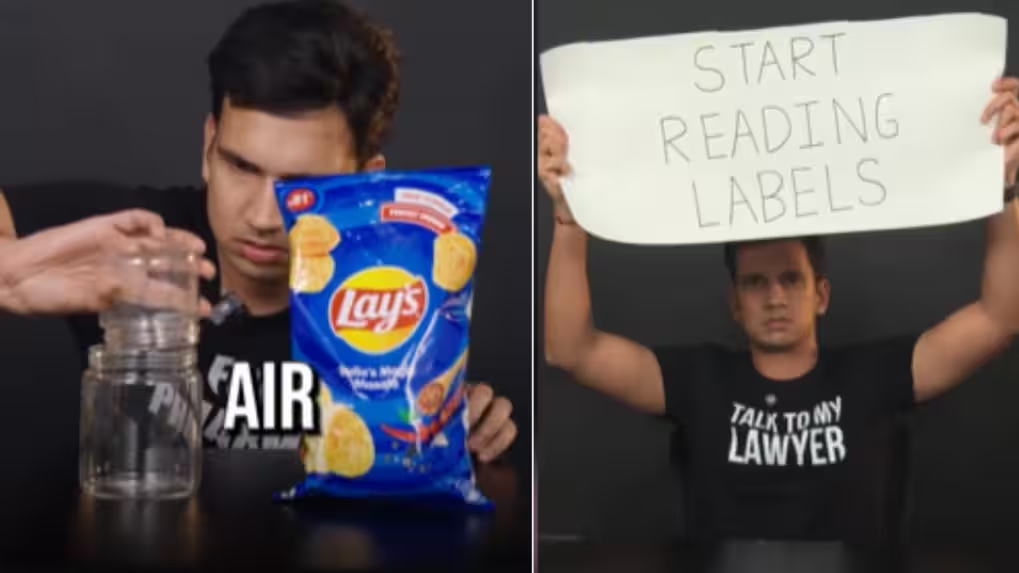
Revant Himatsingka , widely known as Food Pharmer , has posted a video examining the ingredients of Lay’s chips and raising concerns about how the product is marketed.
In the video, Himatsingka visually breaks down the contents of a Lay’s packet by adding its listed ingredients into a jar. He begins by sarcastically highlighting the presence of “air,” followed by small quantities of potatoes.
He then adds palm oil, rice bran oil, iodized salt, spices, maltodextrin, refined sugar, nature-identical flavouring substances, rock salt, acidity regulators, and artificial colours. He ends the demonstration by adding more “air,” presenting it as part of the product composition.
The video is a powerful visual demonstration: a jar filled mostly with additives, oils, and air — with very little actual potato.
Celebrity Endorsements Under Fire
Alongside the ingredient breakdown, the video features clips of celebrities and athletes endorsing Lay’s. Himatsingka claims that while such figures promote the product, they do not consume it themselves.
He further states that children who watch these endorsements may develop a habit of consuming the snack — a habit that could have long-term health consequences.
The video includes placards with messages such as:
- “What are we feeding our kids?”
- “Please read labels.”
Himatsingka concludes by recommending that consumers either limit their intake of Lay’s or avoid it altogether.
The Viral Impact: One Comment, ‘I’ve stopped buying several products’
The post triggered a range of responses in the comments section, with several users saying it prompted them to review food labels more carefully.
One user wrote: “Thanks to your campaign, I recently started paying closer attention to food labels. As a result, I’ve stopped buying several products that contain ingredients like Maltodextrin.”
Another commented sarcastically: “I believe the only natural ingredient in that is air.”
These comments suggest that Himatsingka’s video is not just getting views — it is changing consumer behavior.
Broader Concerns About the Food Industry
Some users raised broader concerns about the food industry.
One comment said: “With all of the progress we have made, why has healthy snacking not become more accessible? It’s sad that cost-cutting and profit takes priority over health.”
Another user pointed to the role of endorsements: “The celebrity endorsement problem in food is real. Someone with millions of followers promotes a product they’d never feed their own kids and calls it a paid partnership in fine print. The disclosure is there but the accountability isn’t. As someone building in food, ingredient transparency isn’t optional. It’s the only way to build something that lasts.”
Who Is Food Pharmer (Revant Himatsingka)?
Revant Himatsingka is a food label awareness activist who gained prominence through his Instagram handle Food Pharmer. He creates short, engaging videos breaking down the ingredients of popular packaged foods — from instant noodles to breakfast cereals to chips.
His style is direct, sarcastic, and visual. He often physically demonstrates how little “real food” is in a product compared to additives, oils, and sugars.
He has previously called out brands like Maggi, Kellogg’s, Parle, and others. His videos regularly go viral, sparking conversations about ultra-processed foods and misleading marketing.
The Ingredients in Lay’s: What’s Actually in the Packet?
Based on Himatsingka’s video, a typical Lay’s chips packet contains:
- Air — takes up most of the packet volume (visually demonstrated)
- Potatoes — a small quantity relative to the packet size
- Palm oil — a highly processed, saturated fat
- Rice bran oil — another vegetable oil
- Iodized salt — sodium
- Spices — flavoring
- Maltodextrin — a processed carbohydrate used as a filler/thickener
- Refined sugar — added sweetness
- Nature-identical flavouring substances — chemically synthesized flavors
- Rock salt — additional sodium
- Acidity regulators — to control pH
- Artificial colours — for visual appeal
Health experts have previously raised concerns about:
- Palm oil (high in saturated fat, environmental concerns)
- Maltodextrin (high glycemic index, can spike blood sugar)
- Artificial colours (some are banned or restricted in certain countries)
- High sodium content (linked to hypertension)
The ‘Air’ Argument: What Lay’s Says vs. What Consumers See
Chip manufacturers have long defended the “air” in their packets as necessary cushioning to prevent breakage during transport. The empty space (technically nitrogen gas, not air) also helps preserve freshness and prevent oxidation.
However, consumers increasingly see the large amount of “air” as deceptive packaging — paying for a big bag that contains mostly nothing.
Himatsingka’s video visually drives this point home: the jar fills with air first, then a small amount of potato, then many additives, then more air.
Celebrity Endorsements: A Longstanding Criticism
Himatsingka’s video also targeted celebrity endorsements — a practice that has faced criticism for years.
Critics argue that celebrities:
- Rarely consume the products they endorse
- Are paid millions to lend their credibility to unhealthy products
- Influence children and young adults who look up to them
- Use fine-print disclaimers (“paid partnership”) to absolve themselves of responsibility
In India, celebrities from Bollywood (actors, cricketers) have endorsed everything from chips to soft drinks to instant noodles. Himatsingka’s video adds to a growing body of criticism questioning the ethics of such endorsements.
Consumer Reactions: ‘I’ve Stopped Buying’
The comments section of Himatsingka’s post (and the article) shows a shift in consumer mindset.
Several users explicitly said they have stopped buying Lay’s or other packaged snacks after watching his videos.
Others said they have started reading ingredient labels more carefully — a key goal of Himatsingka’s activism.
This suggests that Food Pharmer’s influence extends beyond social media engagement to actual changes in purchasing behavior.
Industry Response: Has Lay’s Responded?
The article does not mention any response from Lay’s (PepsiCo) or the celebrities featured in the video. In the past, when Food Pharmer has called out other brands, some have responded by reformulating products or changing marketing claims.
It remains to be seen whether Lay’s or its parent company, PepsiCo, will issue a statement or make any changes in response to this viral criticism.
The Bigger Conversation: Ultra-Processed Foods in India
Himatsingka’s video is part of a larger conversation about ultra-processed foods (UPFs) in India.
As India’s middle class grows and urban lifestyles become more hectic, consumption of packaged snacks has skyrocketed. At the same time, rates of obesity, diabetes, heart disease, and other lifestyle diseases are rising.
Health experts have called for:
- Front-of-pack warning labels (like those in Chile, Mexico, Peru)
- Restrictions on marketing of unhealthy foods to children
- Taxation on sugary and ultra-processed foods
- Transparent celebrity endorsement policies
Food Pharmer’s activism brings these issues to a mass audience in an engaging, shareable format.
How to Read Food Labels: Food Pharmer’s Advice
Based on Himatsingka’s previous videos, his advice for consumers includes:
First, ignore the front of the package. Marketing claims (“natural,” “healthy,” “good for you”) are often misleading.
Second, turn the package around and read the ingredient list. Ingredients are listed in descending order by weight. If sugar, palm oil, or maltodextrin appear near the top, the product is highly processed.
Third, check the nutrition facts panel. Pay attention to serving size, calories, fat (especially saturated fat), sodium, and added sugar.
Fourth, be skeptical of celebrity endorsements. Just because a famous person promotes it does not mean it is good for you.
Fifth, when in doubt, choose whole foods. A real apple is always better than apple-flavoured chips.