
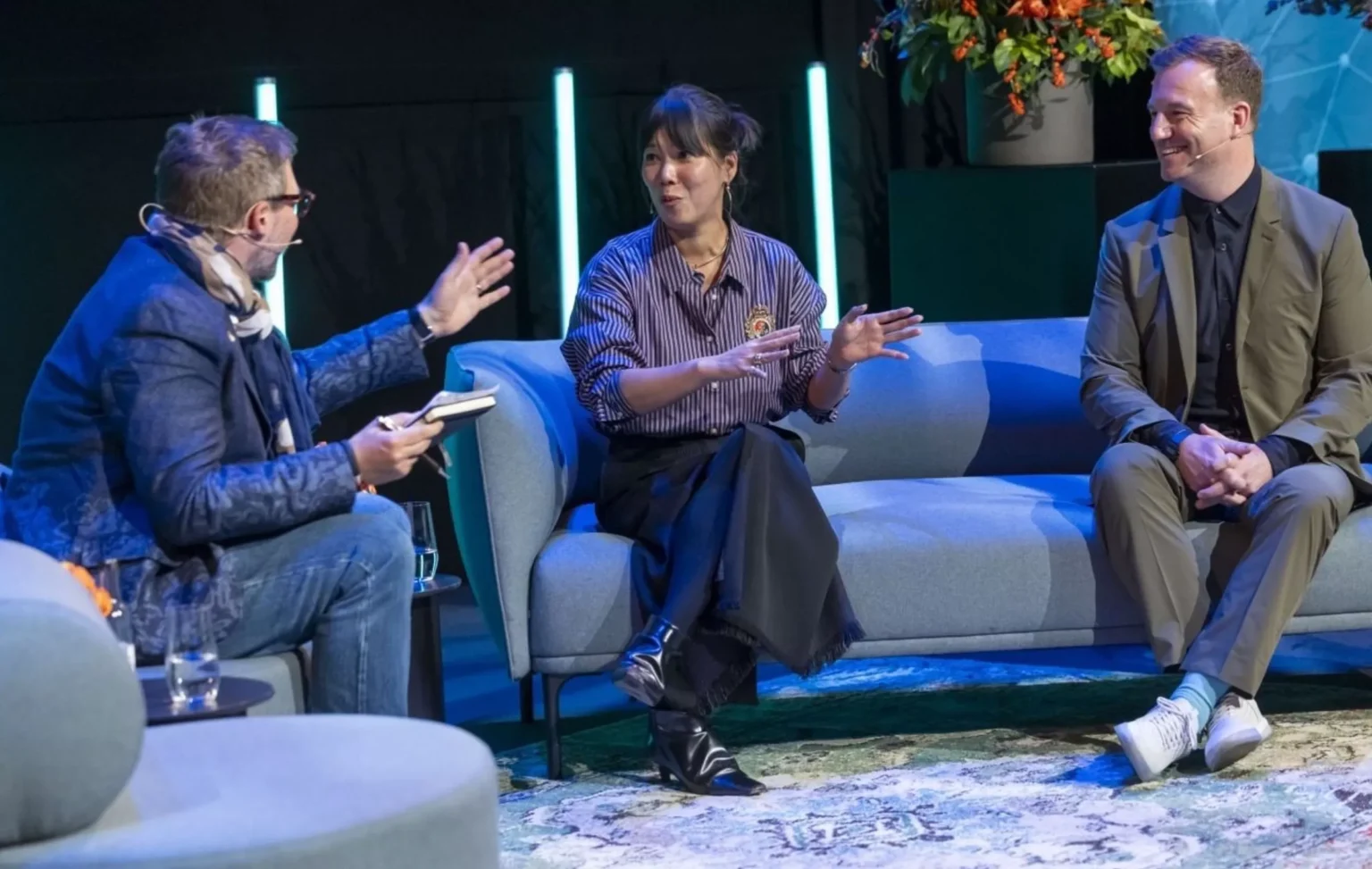
FutureBrand’s Queenie Lo, President of Spatial Design, joined a flagship panel at the European Food Service Summit, making the case that spatial branding is not a design luxury – it is a commercial lever.
The session examined a fundamental shift sweeping the hospitality and food service sector: away from operations-first thinking, and toward strategies anchored in experience, brand identity, and intentional design investment.
Real commercial outcomes
The panel showed that well-designed physical environments drive real commercial outcomes: higher footfall, increased average basket size, and guests who feel something when they walk through the door.
However, there is no universal formula. What works in London rarely translates to Dubai or Seoul. Brands that copy-paste their way across markets do so at their own risk.
Reverse-engineering from KPIs
Drawing on examples from brands including L’Occitane, McDonald’s, and Starbucks, the discussion explored how spatial decisions – from format size to seating configuration – are increasingly reverse-engineered from P&L requirements.
Design that begins with clear key performance indicators consistently outperforms design that begins with aesthetics alone.
Key takeaways
The European Food Service Summit panel highlighted that:
- Spatial branding directly impacts footfall and average spend
- One-size-fits-all design fails across different markets
- Start with commercial goals, not just visual appeal
- Global brands like Starbucks and McDonald’s are already shifting strategy
Why this matters
For restaurateurs and food service operators, the message is clear: experience is the new currency. Customers today expect more than just good food. They want an environment that feels intentional, branded, and memorable.
Queenie Lo’s appearance at the summit reinforces FutureBrand’s position at the intersection of design and business strategy. As competition in the food service industry intensifies, those who treat spatial design as a core commercial function – not an afterthought – will have a distinct advantage.
The session concluded that in an era where digital and physical experiences blur, the restaurants that win will be those that design spaces people want to return to, not just pass through.